
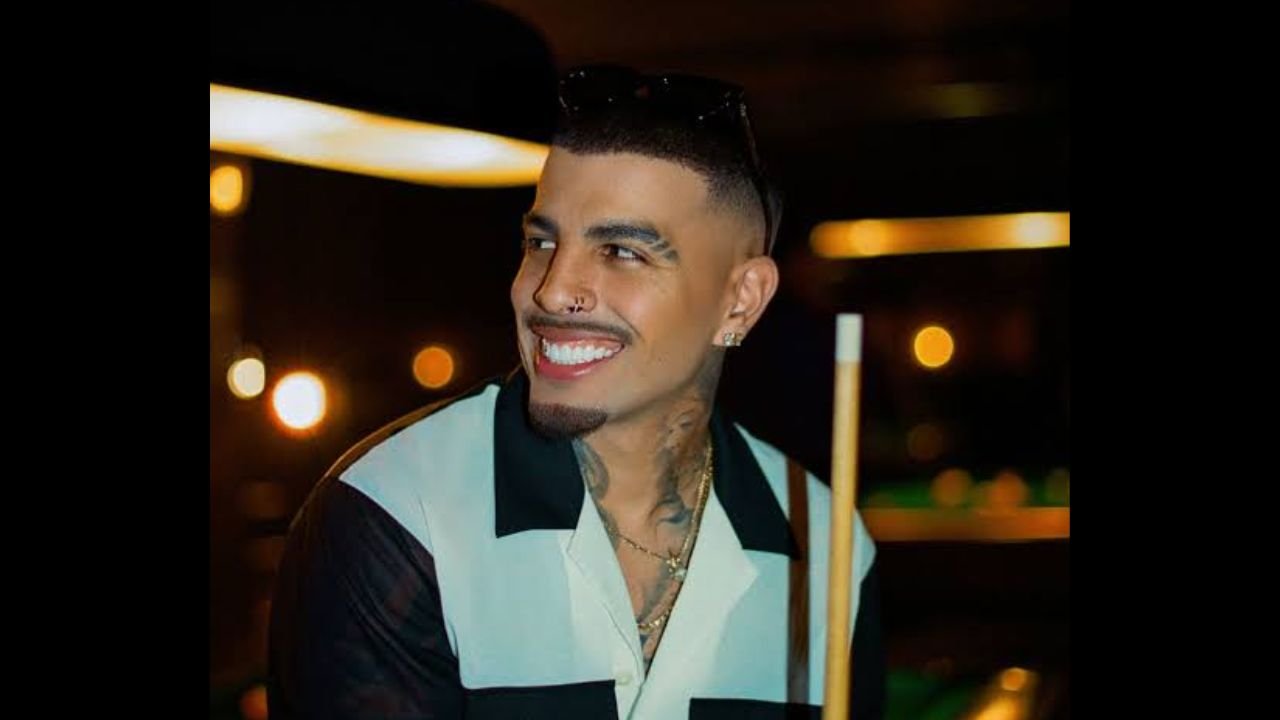
Rauw Alejandro has become one of Puerto Rico’s most recognizable names in contemporary Latin music, combining reggaeton with R&B, pop, electronic production and dance. Born Raúl Alejandro Ocasio Ruiz, the singer, songwriter and dancer has built a career that stretches far beyond the traditional boundaries of Latin urban music.
His rise is particularly striking because music was not always his first ambition. As a teenager and young adult, Rauw was focused on soccer and hoped to pursue the sport professionally. An injury eventually changed that direction, opening the door to the musical career that would make him an international star.
Early Life
Rauw was born on January 10, 1993, in San Juan, Puerto Rico.
He spent much of his childhood between Puerto Rico and the United States, growing up in an environment where music was already part of family life. His father, Raúl Ocasio, worked as a guitarist, while his mother, María Nelly Ruiz, performed as a backing vocalist.
That musical household exposed Rauw to a wide range of sounds from an early age. His father’s taste introduced him to artists such as Elvis Presley and Michael Jackson, while his mother’s work connected him with Latin musical traditions.
Those influences would eventually become visible in Rauw’s own genre-blending approach.
Soccer First
Before recording songs professionally, Rauw dreamed of becoming a professional soccer player.
He played competitively during his youth and continued pursuing the sport at the university level. His athletic background also helped develop the physical discipline that would later become an important part of his performances.
An injury eventually forced him to reconsider his sporting ambitions.
Rather than abandoning his creative interests, Rauw began concentrating more seriously on music. The transition proved decisive.
Music Breakthrough
Rauw initially built attention by releasing music independently and developing an audience online.
His early work demonstrated that he was interested in more than conventional reggaeton. He incorporated contemporary R&B, electronic sounds, pop melodies and dance influences into his recordings.
That combination helped distinguish him from many other emerging Latin urban performers.
His major breakthrough arrived with Afrodisíaco, released in 2020. The album established Rauw as a serious new force and earned a Grammy nomination for Best Urban Music Album.
“Todo de Ti”
The song that transformed Rauw’s international profile was “Todo de Ti.”
Released as part of his 2021 album Vice Versa, the track moved away from the harder edge traditionally associated with reggaeton and leaned heavily into disco, funk and dance-pop influences.
Its infectious melody and retro-inspired production helped it become a worldwide streaming and chart success.
The song also demonstrated one of Rauw’s defining strengths: he could bring Latin urban music into a broader pop environment without losing his identity as a Puerto Rican artist.
Saturno Era
Rauw continued experimenting with his sound through Saturno, released in 2022.
The project explored influences from 1980s and 1990s hip-hop, freestyle and electronic dance music. Rather than treating reggaeton as a fixed formula, he used it as a foundation for a much wider sonic world.
A follow-up, Playa Saturno, arrived in 2023 and continued elements of that futuristic, dance-oriented concept.
Together, the projects reinforced his reputation as an artist willing to take creative risks.
Cosa Nuestra
In 2024, Rauw entered another musical phase with Cosa Nuestra.
The album drew inspiration from classic salsa and older Latin sounds while maintaining the modern production associated with his catalog. Its title and presentation also reflected an interest in Puerto Rican and Caribbean musical history.
This ability to move between eras has become one of the defining features of Rauw’s career.
Instead of choosing between traditional Latin music and contemporary urban sounds, he has repeatedly attempted to connect them.
Rosalía Romance
Rauw’s personal life received enormous attention because of his relationship with Spanish superstar Rosalía.
The pair began dating in 2020 and eventually became one of Latin music’s most recognizable celebrity couples. They announced their engagement in 2023 through the joint project RR, which included the song and video “Beso.”
The engagement, however, did not lead to marriage.
Rauw and Rosalía announced their separation in July 2023, bringing an end to one of the most closely followed romances in contemporary Latin pop.
Life Today
Since that breakup, Rauw has kept his romantic life considerably more private.
Various reports have linked him to a non-celebrity partner, but details about that relationship have not been extensively confirmed by Rauw himself. He has generally avoided turning his private relationships into public entertainment.
That discretion represents a contrast with the enormous attention surrounding his former engagement to Rosalía.
More Than a Singer
Rauw Alejandro’s appeal extends beyond his recordings.
His background as a dancer and former athlete has helped make movement an important element of his performances. His music videos frequently incorporate elaborate choreography, while his live shows combine singing, dancing and visual production.
That combination has helped him develop an identity closer to a complete pop performer than a conventional recording artist.
His Influence
Rauw arrived during a period when Latin music was expanding rapidly across international markets. Rather than simply following the global popularity of reggaeton, he helped push the genre into new territory.
His music has demonstrated how Puerto Rican urban sounds can coexist with disco, R&B, electronic music, salsa and pop without becoming disconnected from their roots.
From Afrodisíaco and Vice Versa to Saturno, Playa Saturno and Cosa Nuestra, his catalog reflects an artist constantly searching for a new direction.
At 33, Rauw Alejandro remains one of the most versatile figures in Latin music.
His journey from aspiring soccer player to international performer was shaped by an unexpected career change, but his success has come from much more than circumstance. His family introduced him to music, his athletic background gave him discipline and his willingness to experiment gave him a distinctive artistic voice.
For Rauw, the next chapter is likely to be another evolution rather than a repeat of what came before. His career has been defined by reinvention—and that may ultimately become his most lasting contribution to modern Latin music.