
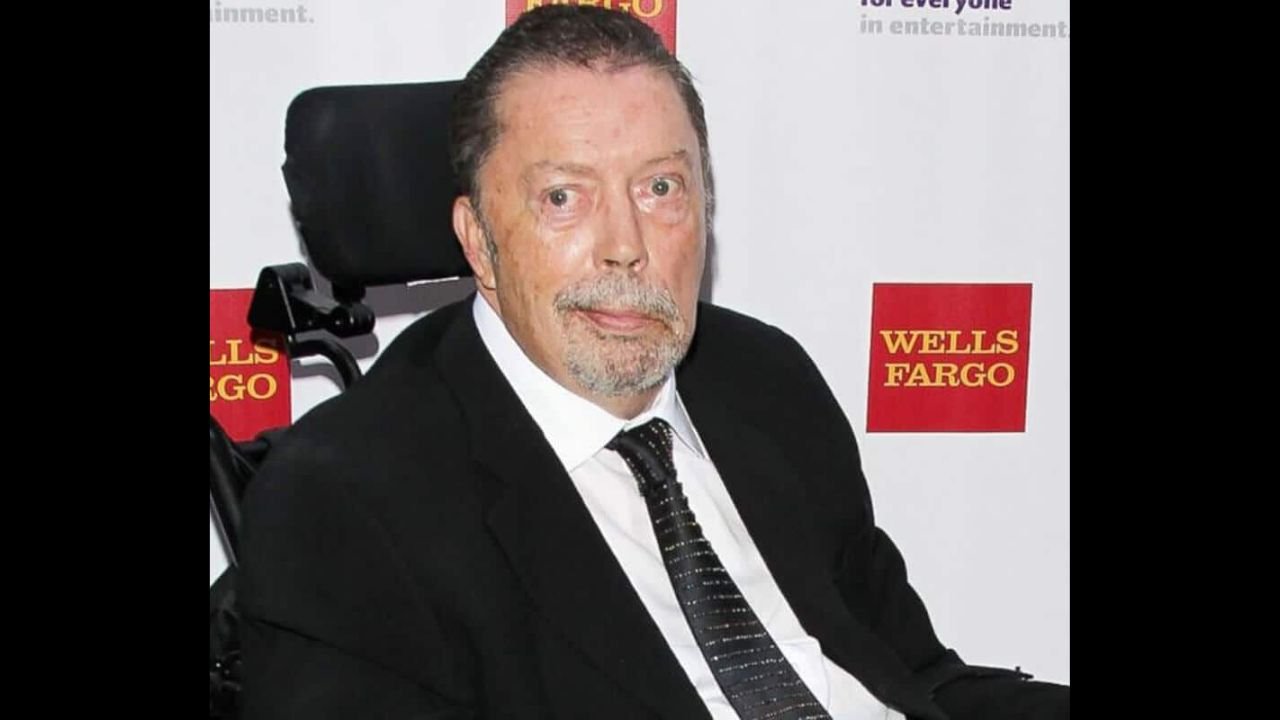
Tim Curry had an estimated net worth of about $8 million at the time of his death on August 25, 2026, at age 80. The figure reflects more than five decades of work across movies, television, Broadway, London’s West End, music and voice acting.
For an entertainer whose credits ranged from The Rocky Horror Picture Show and Clue to It and The Wild Thornberrys, $8 million may appear surprisingly modest. However, celebrity net-worth figures are estimates rather than audited financial disclosures, and Curry’s career was built during an era when salaries, residual arrangements and blockbuster paydays were very different from those available to today’s biggest stars.
His fortune also tells only part of the story. Curry created a body of work that remained commercially and culturally relevant decades after many of his best-known performances were released.
Net Worth
Several entertainment wealth estimates placed Tim Curry’s net worth at approximately $8 million around the time of his death.
The number should not be interpreted as the confirmed value of his estate. Curry never publicly released a detailed financial statement showing his cash, investments, property, royalties, liabilities or other assets.
Celebrity wealth estimates generally combine publicly available information about property, known projects and career earnings.
What is clear is that Curry had numerous income streams during his extraordinarily long career.
Rocky Horror
Curry’s financial journey cannot be separated from Dr. Frank-N-Furter.
He originated the character in the stage production of The Rocky Horror Show before delivering the performance that made him internationally famous in the 1975 movie The Rocky Horror Picture Show.
The film was produced on a relatively small budget and was not initially the enormous success its reputation might suggest today. Curry therefore did not receive the type of multimillion-dollar salary modern audiences might associate with an iconic movie role.
Its fortunes changed dramatically through midnight screenings.
Rocky Horror developed into one of cinema’s most enduring cult phenomena, remaining culturally relevant for generations and permanently linking Curry to its unconventional central character.
Movie Career
Curry successfully avoided becoming dependent on one character.
He played Rooster Hannigan in Annie, the frantic butler Wadsworth in Clue and the imposing Darkness in Ridley Scott’s Legend.
He also appeared as hotel concierge Mr. Hector in Home Alone 2: Lost in New York and transformed into Long John Silver for Muppet Treasure Island.
Each role expanded his career beyond Rocky Horror and created decades of steady screen employment.
Rather than following a conventional leading-man path, Curry became one of Hollywood’s most recognizable character actors — someone capable of making a supporting role as memorable as the film’s stars.
Pennywise
Another performance introduced Curry to an entirely different audience.
In 1990, he played Pennywise the Dancing Clown in the television adaptation of Stephen King’s It.
The production was technically a television miniseries rather than a theatrical blockbuster, meaning Curry’s compensation would have reflected television economics of the period.
Financially, it was unlikely to rival today’s major franchise contracts. Culturally, however, the role became priceless to his career.
His interpretation of Pennywise remained one of his signature performances for decades and gained renewed attention when King’s novel was adapted for cinemas years later.
Voice Acting
Voice work became another important component of Curry’s earnings.
His instantly recognizable voice made him particularly valuable in animation. One of his best-known performances was Nigel Thornberry in Nickelodeon’s The Wild Thornberrys.
Curry also accumulated extensive credits across animated television programs, films and video games.
Voice acting gave him a different kind of career longevity. He could move between children’s entertainment, villains, comedy and fantasy without being limited by his physical appearance or age.
That became particularly significant later in his life.
Broadway Success
Curry was never simply a movie actor.
The stage remained central to his professional identity, beginning with the theatre production that launched Rocky Horror.
He later earned major recognition on Broadway, including Tony Award nominations for performances in ** Amadeus, My Favorite Year and Monty Python’s Spamalot**.
His acclaimed performance as King Arthur in Spamalot introduced him to another generation of theatergoers and demonstrated that his stage career remained commercially viable decades after Frank-N-Furter made him famous.
Theater salaries rarely receive the same publicity as Hollywood contracts, but major Broadway and West End productions contributed to Curry’s long-term earnings.
His 2012 Stroke
Curry’s professional life changed dramatically after he suffered a major stroke in 2012.
The stroke affected his mobility, and he subsequently used a wheelchair.
It inevitably restricted the type of physical stage and live-action performances he could accept. A performer who had spent decades moving easily among theatre, film and television suddenly faced substantial new limitations.
Curry nevertheless continued working.
Voice performances were particularly suited to his circumstances, while convention appearances offered another way for him to remain connected with audiences.
His health needs also likely created considerable expenses, although there is no verified public accounting showing how much Curry personally spent on medical treatment, caregivers or accessibility modifications. Claims that healthcare substantially reduced his fortune should therefore be treated as estimates rather than established financial facts.
Convention Income
Curry’s cult status gave him an income opportunity unavailable to many actors of his generation.
He remained highly sought after at fan conventions and special events.
Fans of Rocky Horror, Clue, It, animation and his stage career represented several overlapping generations of admirers. Convention appearances, autograph sessions and photo opportunities became part of his later professional life.
They also allowed Curry to participate in the continuing commercial value of characters he had played decades earlier.
Real Estate
Real estate formed another component of Curry’s reported wealth.
He owned property in Toluca Lake, Los Angeles, an area long associated with entertainment-industry figures. Reports following his death drew renewed attention to his distinctive Mediterranean-style residence.
Property can significantly complicate celebrity net-worth estimates because a home’s market value does not represent cash available to its owner.
Any eventual estate valuation would need to consider real property alongside financial assets, intellectual-property interests, debts and other obligations.
Who Inherits His Estate?
Curry’s private nature makes questions about his estate difficult to answer definitively.
He never married and had no children. However, that does not mean the public can determine who receives his assets simply from his known family tree.
A valid will or trust could designate beneficiaries according to Curry’s wishes. Those beneficiaries could include relatives, friends, charities or other organizations.
If no valid estate plan existed, California’s intestate succession rules could determine who inherits qualifying assets based on surviving relatives.
Until authoritative probate documents or representatives of Curry’s estate disclose those arrangements, claims identifying specific heirs remain speculative.
A Bigger Legacy
Searching “Tim Curry net worth” produces a simple headline number: approximately $8 million.
His actual career is considerably harder to quantify.
Curry created Frank-N-Furter, delivered one of the most remembered versions of Pennywise, turned Clue’s Wadsworth into a cult favorite, became Nigel Thornberry to a generation of children and earned major recognition on both sides of the Atlantic as a stage performer.
His estimated fortune came from decades of unusually diverse work rather than one enormous Hollywood payday.
Whatever the final value of his estate proves to be, Curry left behind something far more durable than a celebrity wealth estimate: performances that continued attracting new audiences more than half a century after his breakthrough.