
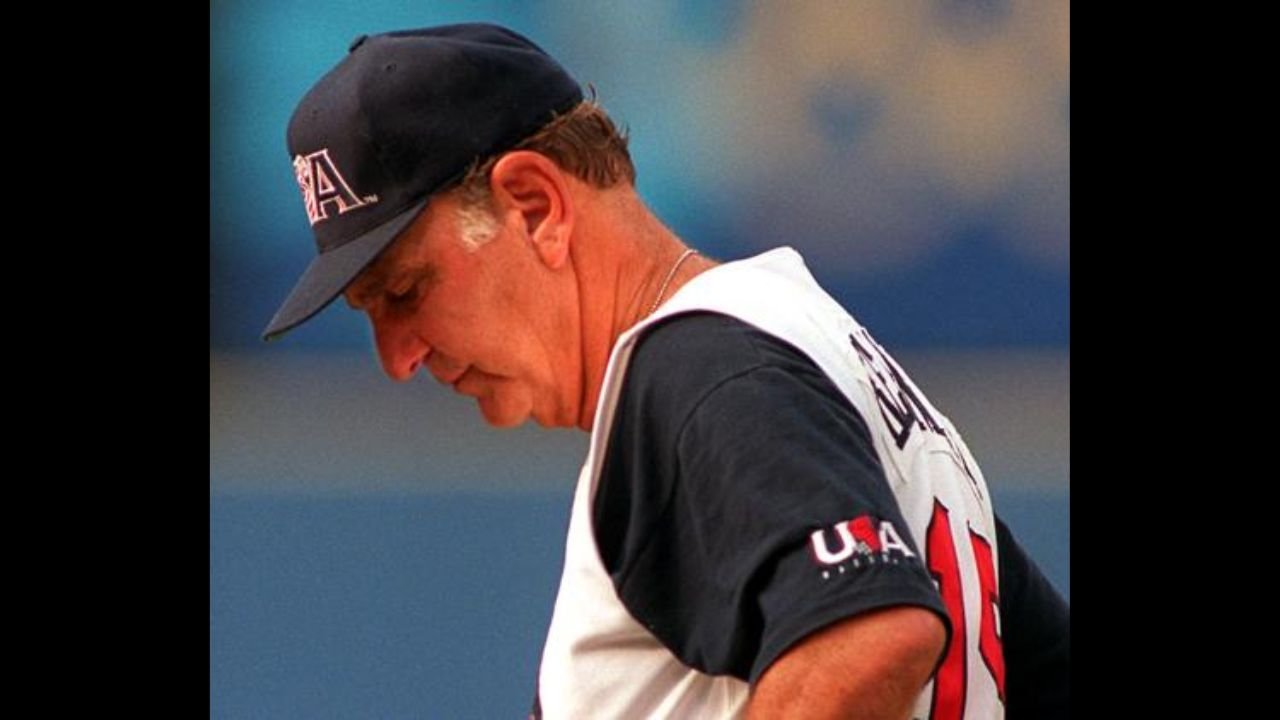
Skip Bertman, the legendary LSU baseball coach who transformed the Tigers into one of college baseball’s defining programs, died on August 14, 2026, at age 88. His death marked the end of an extraordinary career that included five national championships as LSU’s head coach and several years leading the university’s athletic department.
Bertman died at Baton Rouge General Hospital after a brief hospitalization related to heart problems. While his representatives and LSU officials have confirmed that his final hospitalization involved cardiac complications, a more specific cause of death has not been publicly released.
Heart Issues
Bertman’s final illness was connected to his heart.
LSU Athletic Director Verge Ausberry confirmed that the former coach had been hospitalized for cardiac complications before his death. However, public statements have not identified a particular heart condition or provided a more detailed medical diagnosis.
That means it would be premature to attribute his death to a specific cardiac disease without an official medical statement.
The confirmed information is that Bertman experienced heart-related complications during a short hospital stay before he died peacefully early Friday morning.
His Final Hours
Bertman died at approximately 1:12 a.m. at Baton Rouge General Hospital.
His daughters were with him during his final moments, according to reports surrounding his death. The circumstances were described as peaceful, bringing his remarkable life to an end surrounded by family.
He was 88.
For LSU supporters, the news represented the loss of a figure whose influence stretched far beyond the baseball diamond.
A Historic Career
Bertman arrived at LSU in 1984 and immediately began building a program that would eventually become a national powerhouse.
Over 18 seasons as head coach, he guided the Tigers to five NCAA national championships: 1991, 1993, 1996, 1997 and 2000.
LSU also reached the College World Series 11 times during his tenure. He finished his coaching career with an extraordinary 870-330-3 record.
Those numbers explain why Bertman is widely regarded as one of the most successful coaches in college baseball history.
Five Titles
The first championship arrived in 1991, seven years after Bertman took over the program.
LSU returned to the top in 1993 before entering an especially dominant stretch during the second half of the 1990s. The Tigers won consecutive national championships in 1996 and 1997, then captured their fifth title under Bertman in 2000.
That 2000 championship was particularly memorable. LSU finished the season 52-17 and went unbeaten in postseason play, completing its run with a dramatic victory over Stanford in the College World Series championship game.
More Than Wins
Bertman’s contribution to LSU baseball went beyond championships.
When he arrived in Baton Rouge, the program did not have the enormous following it would eventually develop. WAFB reports that LSU averaged only 454 fans per game before Bertman’s first season.
He understood that building a successful college program required more than recruiting talented players.
He invested in the fan experience, promoted games and helped turn baseball into a major part of Baton Rouge’s sports culture. LSU eventually became a national attendance leader, particularly during Bertman’s final years in the dugout.
“Hold the Rope”
One of Bertman’s most remembered teachings was the “Hold the Rope” philosophy.
The lesson centered on trust, teamwork and the idea that players had a responsibility to support one another when circumstances became difficult.
It became closely associated with Bertman’s coaching identity and remained part of his legacy long after he left the dugout.
For former players, the phrase represented something larger than baseball: staying connected and refusing to let teammates down.
Athletic Director
Bertman did not leave LSU after retiring from coaching.
In 2001, he became the university’s athletic director, a position he held until 2008. His move into administration allowed him to influence LSU athletics on a much broader scale.
During his tenure, the department experienced substantial development, including major facility projects and continued success across multiple sports.
His leadership also coincided with LSU football’s national championship in 2003 under head coach Nick Saban.
Nick Saban’s Tribute
Bertman’s influence extended beyond baseball.
Following his death, former LSU football coach Nick Saban recalled advice Bertman gave him before Saban left LSU for the Miami Dolphins.
Bertman encouraged Saban to consider where he wanted his long-term legacy to be built—college football or the NFL.
Years later, Saban said Bertman had been right and acknowledged that leaving LSU for Miami had been a mistake.
The story illustrates the respect Bertman commanded throughout the LSU athletic department.
A Lasting LSU Legacy
Bertman’s name remains deeply connected with LSU baseball.
The playing surface at Alex Box Stadium carries his name, reflecting the lasting impact he had on the program and the university.
Under his leadership, LSU went from a relatively modest baseball operation into one of the sport’s most recognizable programs.
The transformation was not simply measured by trophies. Bertman helped create a culture in which LSU baseball became an important part of the identity of Baton Rouge.
What Is Confirmed?
The most important distinction surrounding Bertman’s death is between what has been confirmed and what remains unknown.
Confirmed: Bertman was hospitalized briefly because of heart-related complications and died peacefully at Baton Rouge General Hospital on August 14, 2026, at age 88.
Not publicly confirmed: A specific medical diagnosis or precise underlying cause of death.
Until his family or an authorized medical source releases additional information, descriptions beyond those facts would be speculation.
Skip Bertman died following a brief hospitalization for heart-related complications, but his specific cause of death has not been publicly disclosed. He died peacefully at Baton Rouge General Hospital at approximately 1:12 a.m., surrounded by his daughters.
His death closes the chapter on one of the most influential careers in LSU history. Across 18 seasons as baseball coach, Bertman won five national championships and compiled an 870-330-3 record. He later served seven years as LSU’s athletic director.