
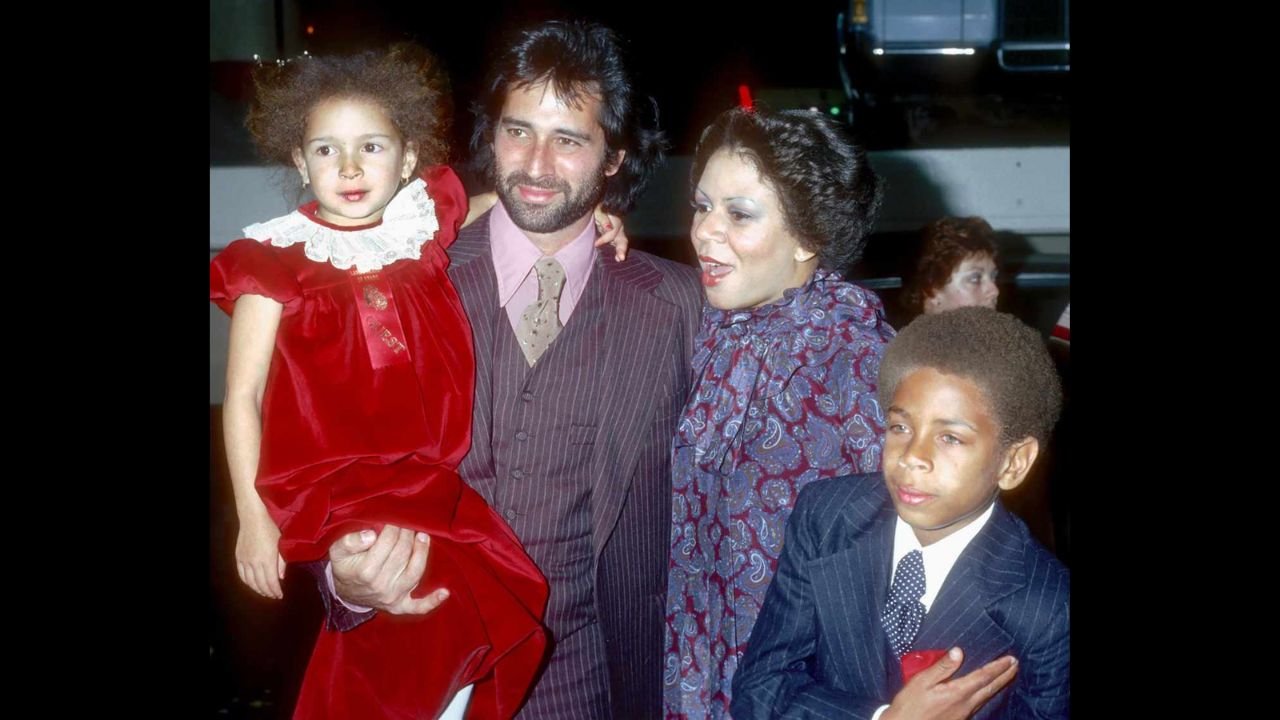
Maya Rudolph grew up in a family deeply rooted in music. Long before she became an Emmy-winning comedian, actress and Saturday Night Live alumna, Rudolph was the daughter of two accomplished figures from the American music industry: singer Minnie Riperton and composer-producer Richard Rudolph.
Her parents’ careers helped shape an extraordinary musical environment during her childhood. Her mother became internationally famous for her extraordinary vocal range and the 1975 hit “Lovin’ You,” while her father worked behind the scenes as a songwriter, composer and producer.
Their influence remained an important part of Rudolph’s story even after tragedy changed her childhood.
Minnie Riperton
Minnie Riperton was Maya Rudolph’s mother and one of the most distinctive voices to emerge from American soul music.
Born in Chicago in 1947, Riperton developed an exceptional vocal ability that eventually became her signature. Her remarkable upper register, including her famous whistle notes, helped distinguish her from other singers of her generation.
She initially performed with groups including the psychedelic soul band Rotary Connection before establishing herself as a solo artist.
Her greatest commercial success arrived with “Lovin’ You.”
Lovin’ You
Released in 1975, “Lovin’ You” became Riperton’s signature song.
The gentle ballad showcased the extraordinary range that made her voice instantly recognizable. The recording also contained a deeply personal detail: near the conclusion of the song, Riperton can be heard singing “Maya” repeatedly.
Those vocals were a reference to her young daughter.
The song consequently became more than a successful pop recording. It also preserved a small piece of the relationship between Riperton and her daughter for generations of listeners.
Richard Rudolph
Maya’s father, Richard Rudolph, is a composer, lyricist and record producer who worked extensively within the music industry.
He collaborated closely with Riperton during her career and co-wrote and produced some of the material associated with her success.
Richard’s work also extended beyond his wife’s recordings. His professional relationships included collaborations with major musicians, including Stevie Wonder, giving him a career that stood on its own within the American music business.
While Riperton was the voice heard by millions, Richard often worked behind the scenes helping create the music.
Their Marriage
Minnie Riperton and Richard Rudolph married in the 1960s and built both a family and creative partnership.
Their professional lives frequently overlapped, with Richard contributing as a songwriter and producer to projects involving his wife.
The couple had two children, Marc and Maya.
Their household was therefore immersed in music from an early age, with songwriting, recording and performance forming part of the world surrounding the family.
Maya’s Childhood
Maya Rudolph was born in 1972 and spent her earliest years in a household shaped by music.
Her childhood was unusual in another important respect: her mother became a major recording artist while also raising young children.
Rudolph has spoken over the years about the experience of growing up with Riperton and about how her mother’s music remained part of her life.
The connection between mother and daughter became especially poignant because Rudolph was only six when Riperton died.
A Devastating Loss
Riperton was diagnosed with breast cancer in 1976.
Despite treatment and continuing to work, her condition eventually became terminal. She died in 1979 at the age of 31.
For Maya, the loss came during childhood.
The death of a parent at such a young age inevitably shaped Rudolph’s personal history, although she has also spoken about the enduring influence her mother had on her.
Riperton’s music ensured that her voice remained familiar long after her death.
Her Father’s Role
After Riperton’s death, Richard Rudolph remained an important figure in Maya’s life.
He continued his work in music and later married Japanese jazz singer Kimiko Kasai in 1990.
Rudolph therefore continued to grow up surrounded by musicians and creative influences, even after the loss of her mother.
Her father’s career also provided a connection to the professional music world that had defined her early childhood.
Two Musical Traditions
Maya Rudolph’s family background brought together different cultural and musical traditions.
Her mother was an African-American singer whose work was deeply connected to soul, pop and R&B. Her father is of Ashkenazi Jewish heritage and worked as a composer, lyricist and producer.
That combination gave Rudolph a particularly distinctive family background.
She eventually developed a creative career of her own, but rather than becoming a professional singer like her mother, she found her strongest artistic outlet in comedy and acting.
From Music to Comedy
Rudolph’s career took her in a different direction from her parents.
She became widely known after joining Saturday Night Live, where her ability to combine musical talent, character work and impressions made her one of the show’s standout performers.
Her subsequent career expanded into film, television and voice acting.
Although comedy became her primary field, music remained part of her artistic identity. Her background helps explain why she has often been comfortable performing in musical and comedic settings.
A Mother’s Lasting Influence
Minnie Riperton’s influence on Rudolph extends far beyond “Lovin’ You.”
The song has become an enduring part of popular music, while Riperton’s distinctive whistle register remains one of the most recognizable vocal techniques in soul history.
For Rudolph, however, Riperton was not simply a celebrated singer. She was her mother.
The repeated “Maya” at the end of “Lovin’ You” has consequently taken on an especially personal meaning. It is a tiny moment in a famous recording that connects an international hit to a mother singing to her daughter.
Maya Rudolph’s parents left her a remarkable creative inheritance.
Minnie Riperton gave the world an unforgettable voice, while Richard Rudolph built an accomplished career as a songwriter and producer. Together, they created a musical household that shaped Rudolph’s earliest years.
Although Maya ultimately chose comedy and acting rather than following her parents directly into the recording industry, their influence remains part of her story.
Today, Rudolph’s own success has created a new chapter in the family’s artistic legacy. Her mother remains remembered for “Lovin’ You,” her father continues to be recognized for his work behind the music, and Maya has established an entirely separate identity as one of America’s most versatile comedic performers.
The connection between them is perhaps captured most beautifully in that familiar recording: a world-famous singer ending a love song by softly singing her daughter’s name.