
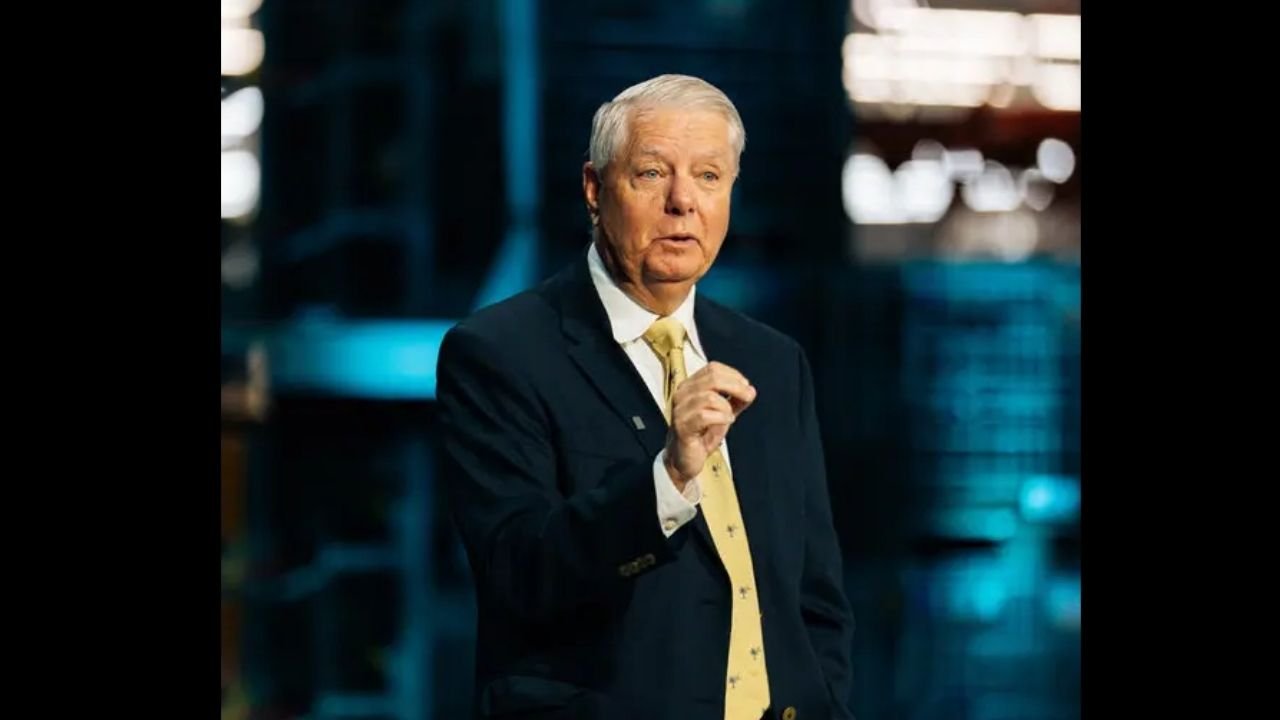
The United States political community is reflecting on the remarkable career of longtime South Carolina Senator Lindsey Graham following news of his passing at the age of 71. The veteran Republican lawmaker became one of the most recognizable voices in Washington after serving for more than two decades in the U.S. Senate and nearly eight years in the House of Representatives.
According to officials, Graham became unwell after experiencing severe chest pain at his Capitol Hill residence on the evening of July 11, 2026. Emergency responders transported him to a nearby hospital, where medical teams worked to stabilize his condition. Preliminary findings from the District of Columbia medical examiner later indicated that an aortic dissection linked to underlying heart disease was responsible.
His passing marks the end of one of the longest-serving and most influential Republican careers in modern American politics.
Humble Beginnings
Born on July 9, 1955, in Central, South Carolina, Lindsey Graham grew up in a working-class family and became the first member of his household to attend college.
He earned both his undergraduate degree and law degree from the University of South Carolina, achievements that laid the foundation for his future career in public service.
Before entering politics, Graham served as a lawyer in the U.S. Air Force. He later continued his military career in the Air Force Reserve, eventually retiring with the rank of colonel. His military background strongly influenced his views on national security and foreign policy throughout his political career.
Rise in Congress
Graham entered national politics in 1995 after winning election to represent South Carolina’s 3rd Congressional District in the U.S. House of Representatives.
During four terms in the House, he developed a reputation as a disciplined conservative with a strong interest in defense, military affairs and judicial matters.
In 2002, he successfully campaigned for the U.S. Senate seat from South Carolina, beginning a Senate career that would span four consecutive terms.
Over the years, Graham became one of the Republican Party’s most experienced lawmakers, frequently serving in influential leadership and committee positions.
Powerful Senate Career
Throughout his Senate service, Graham helped shape debates on national security, foreign affairs, immigration, judicial appointments and federal spending.
At the time of his passing, he served as chairman of the Senate Budget Committee while continuing to play an active role in discussions involving defense and international relations.
His willingness to engage in major policy debates made him one of the Senate’s most visible members, often appearing on national television to explain Republican positions on key issues.
Regardless of political differences, few questioned his commitment to legislative work and his deep understanding of congressional procedure.
Foreign Policy Focus
International affairs remained one of Graham’s defining priorities throughout his career.
He consistently supported a strong American military presence overseas and advocated increased defense spending.
His backing of the Iraq War, support for NATO allies and firm stance toward Iran, Russia and China reflected his belief that American leadership played an essential role in maintaining global stability.
Graham also became a frequent visitor to Ukraine following Russia’s invasion. Just one day before his passing, he had returned from Kyiv after meeting President Volodymyr Zelenskyy during his tenth visit to the country.
His continued involvement demonstrated his commitment to international security until the very end of his public career.
Changing Relationship With Trump
One of the most remarkable political stories of the past decade involved Graham’s relationship with Donald Trump.
During the 2016 Republican presidential primary, Graham openly criticized Trump’s candidacy and questioned his leadership style.
However, following Trump’s election victory, the two gradually developed a close working relationship built on shared policy priorities.
Over time, Graham became one of Trump’s most trusted Senate allies, regularly defending the administration’s agenda and offering strategic advice on judicial nominations, foreign policy and legislative priorities.
The pair were also known to spend time together outside politics, including regular rounds of golf.
Tributes Across Politics
Messages of respect quickly arrived from political leaders in the United States and around the world.
President Donald Trump described Graham as “like family,” praising his loyalty, patriotism and tireless dedication to serving the country. Trump also directed that American flags be lowered to half-staff in his honour.
South Carolina Governor Henry McMaster called Graham an irreplaceable advocate for both his home state and the nation.
International leaders, including Israeli Prime Minister Benjamin Netanyahu and Ukrainian President Volodymyr Zelenskyy, also recognised Graham’s long-standing support for their countries and his active role in international diplomacy.
Lawmakers from both major political parties remembered him as an experienced negotiator whose influence extended well beyond party lines.
Senate Seat to Be Filled
Graham’s departure creates an important vacancy in the U.S. Senate.
Under South Carolina law, Governor Henry McMaster will appoint an interim senator to represent the state until voters choose a permanent successor.
Because Graham’s seat was already scheduled for election during the November 3, 2026, midterm elections, the winning candidate will complete the remainder of the term after the statewide vote.
The upcoming contest is expected to attract significant national attention given Graham’s long-standing influence within the Republican Party.
Lasting Legacy
Lindsey Graham leaves behind a political legacy built on decades of public service, military experience and active participation in some of the nation’s most significant policy debates.
From his early years in the House of Representatives to his leadership in the Senate, he became one of Washington’s most recognizable political figures. His work on national security, judicial appointments, foreign affairs and budget policy shaped discussions across multiple presidential administrations.
Although opinions about his positions often differed, supporters and critics alike acknowledged his dedication, preparation and willingness to engage on complex national issues.
His influence on American politics will continue to be reflected in the policies he helped shape, the legislation he supported and the relationships he built throughout more than three decades of public service.