
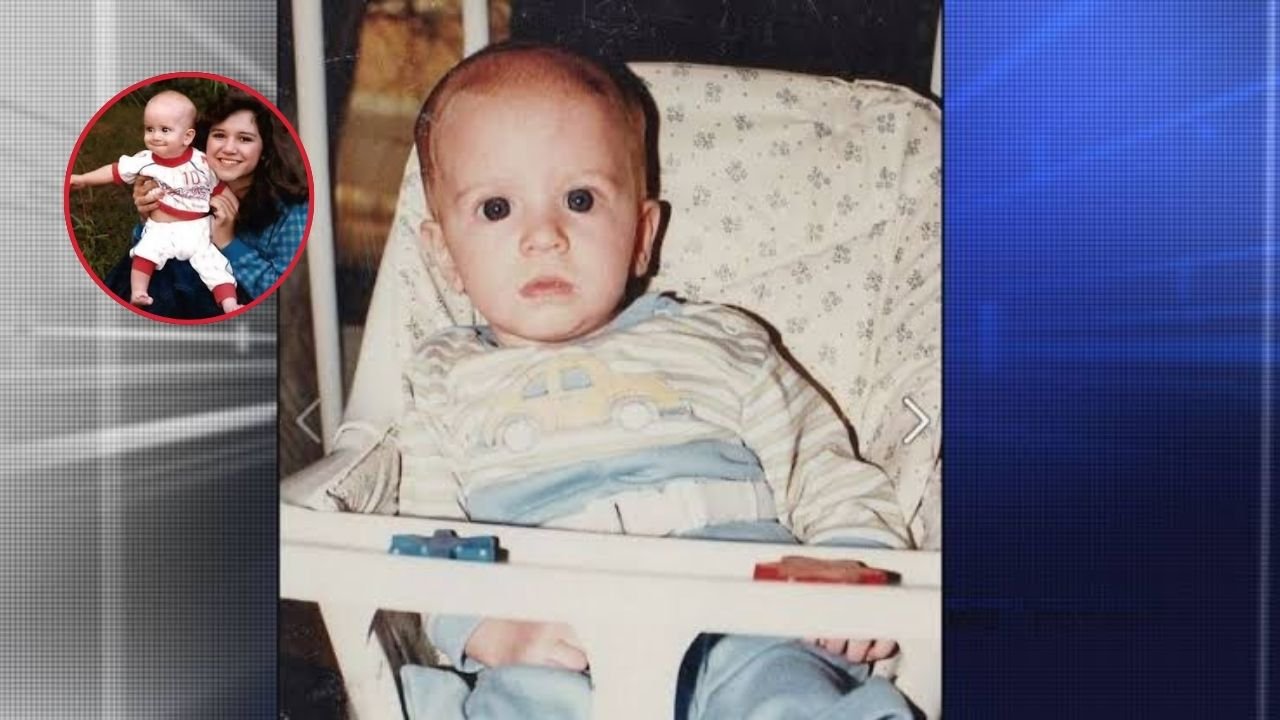
The disappearance of Christopher Abeyta remains one of Colorado’s most heartbreaking missing child cases, but a new development in 2026 has renewed hope for answers.
Christopher, who vanished as a seven-month-old baby nearly four decades ago, became the focus of renewed attention after a man in Colorado reportedly came forward claiming he could be the missing child. The possible identification has led Christopher’s family to begin DNA testing to determine whether the claim is genuine.
The results are expected to take several months, leaving the family waiting for what could become a major turning point in the decades-long investigation.
The 2026 Lead
On July 31, 2026, a man entered a bar in Old Colorado City, Colorado, and approached a bartender with information that caught attention.
The man reportedly shared photographs comparing his own facial features with images connected to Christopher’s disappearance. He explained that he had traveled from another state after learning about the case and believed he could possibly be the missing child.
The interaction was reported to authorities, and Christopher’s family began the process of verifying the person’s identity through DNA testing.
While the development has created renewed optimism, investigators and relatives remain careful because previous leads in the case have not produced confirmed answers.
Family Waits For Results
Christopher’s sister, Denise Alves, expressed appreciation toward the person who reported the information and helped bring the possible lead forward.
The family has spent decades searching for answers and understands the importance of confirming any claim through scientific evidence. DNA testing is considered the only reliable way to determine whether the man is truly Christopher.
Until the results are available, the family continues to approach the situation with both hope and caution.
The 1986 Disappearance
Christopher Abeyta disappeared on July 15, 1986, from his family’s home in Colorado Springs.
At the time, Christopher was only seven months old. According to investigators, he was taken from his crib during the night while his parents were asleep in the same bedroom.
The sudden disappearance shocked the community and launched a major investigation. Despite extensive efforts over the years, authorities were unable to locate Christopher or determine his final whereabouts.
The Investigation
The case has remained open for decades, with investigators examining numerous possibilities and following many tips.
One theory involved a woman connected to Christopher’s family through his father. Investigators looked into allegations involving harassment calls and possible connections before and after the disappearance.
However, authorities stated that there was never enough evidence to establish probable cause for an arrest.
The lack of physical evidence and the passage of time have made solving the case increasingly difficult.
Evidence Problems
The investigation faced additional challenges because important evidence issues emerged over the years.
A major setback occurred when original physical evidence collected from the home was reportedly destroyed by the Colorado Springs Police Department.
The loss of evidence complicated efforts to re-examine the case using modern investigative methods. Cold case investigators often rely on preserved evidence, updated technology, and new witness information to revisit older cases.
A Fresh Case Review
In July 2026, exactly 40 years after Christopher disappeared, a newly assigned cold case detective began reviewing the investigation again.
The review involved examining the original case files, searching for overlooked information, and identifying possible leads that may not have received attention in previous investigations.
The renewed examination reflects a broader effort by law enforcement agencies to use modern methods to revisit unresolved cases.
Community Interest
Christopher’s disappearance has continued to receive attention from missing persons advocates and members of the public who hope for a resolution.
Cold cases often depend on new witnesses, advances in technology, or unexpected information from people who may have remained silent for years.
The 2026 claim has brought fresh public interest because it represents a possible answer to a mystery that has lasted since the mid-1980s.
The Importance Of DNA
DNA testing has transformed many missing persons investigations by allowing families and investigators to confirm identities decades after someone disappears.
In Christopher’s case, DNA results will determine whether the man who came forward is connected to the family. Until testing is completed, no conclusion can be made.
For relatives who have spent years searching for Christopher, the process represents a moment filled with both uncertainty and possibility.
The Christopher Abeyta missing case remains an active and emotional investigation. The new lead in 2026 has provided the family with renewed hope, but confirmation depends entirely on DNA testing.
After 40 years without answers, even a possibility brings attention back to Christopher’s story. Whether this latest development solves the mystery or leads investigators toward another path, the search for the truth continues.