
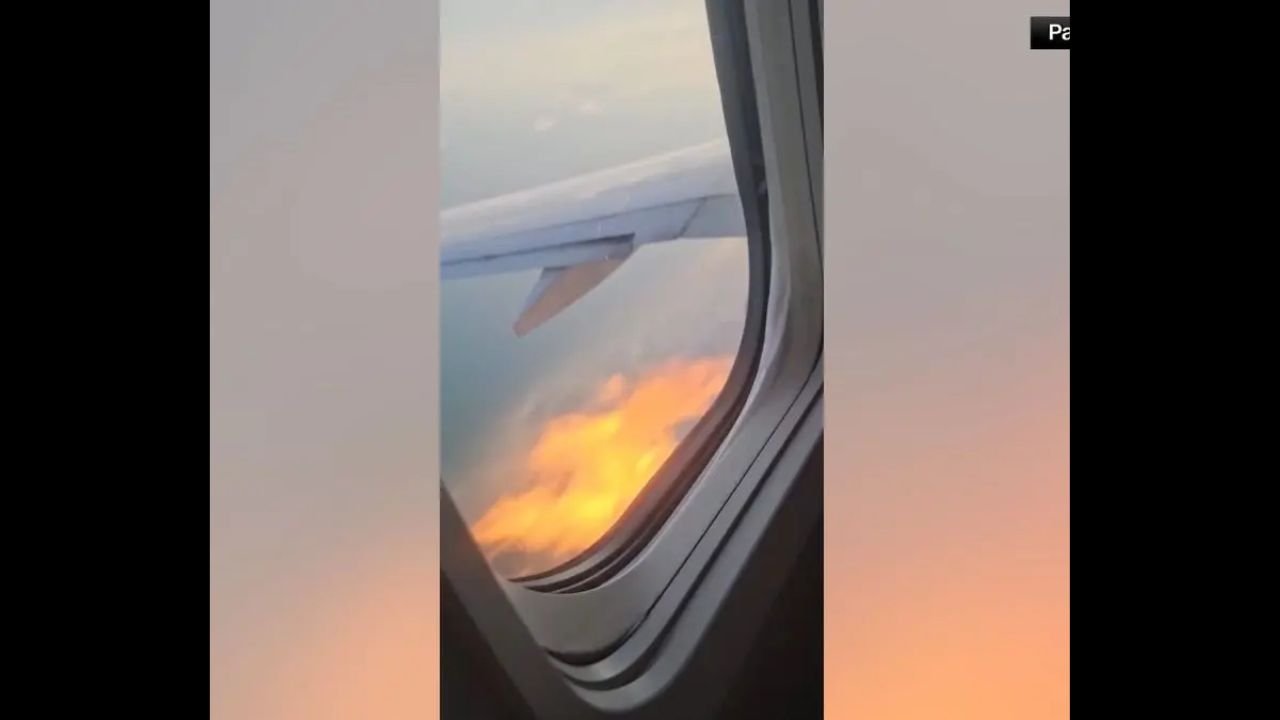
An American Airlines flight bound for Charlotte, North Carolina, was forced to return to Myrtle Beach International Airport after striking birds shortly after takeoff, triggering an engine emergency and frightening moments for the people aboard.
American Airlines Flight 1760, operated by a Boeing 737, was carrying 172 passengers and crew members when the aircraft encountered a flock of birds during its climb. Witnesses reported seeing flames and smoke coming from the left side of the aircraft, while passengers described hearing a loud bang followed by unusually intense engine noise.
Despite the dramatic incident, the aircraft returned safely to the airport and no injuries were reported.
Bird Strike
The incident occurred Monday morning soon after Flight 1760 departed Myrtle Beach International Airport for Charlotte.
During the initial climb, the aircraft struck a group of birds. The impact affected the left engine and prompted the flight crew to declare an emergency.
Radio communications captured the urgency of the situation as the crew informed air traffic controllers that they were experiencing an engine problem.
Another pilot operating nearby also reported seeing what appeared to be birds entering the aircraft’s left engine.
The reports helped airport officials understand the nature of the emergency before the Boeing 737 returned to Myrtle Beach.
Flames Seen
The bird strike appeared particularly alarming to people on the ground.
Observers reported seeing flames and smoke coming from the aircraft’s left wing as it continued its climb. Passengers inside the plane also noticed the sudden change in sound.
John Richter, one of the passengers, later recalled hearing a large bang followed by significant noise from the aircraft.
For those onboard, the unexpected impact occurred during one of the most critical portions of a flight: shortly after takeoff.
Emergency Return
After reporting the engine problem, the flight crew turned the aircraft back toward Myrtle Beach International Airport.
The Boeing 737 completed the return without further incident and landed safely under its own power.
Once the aircraft reached the gate, passengers were able to leave the plane. Airport and airline personnel then began examining the aircraft and the surrounding runway area.
Although flames had reportedly been visible during the incident, officials later found no active fire or fluid leak after the aircraft landed.
Runway Debris
The bird strike also left substantial evidence on the runway.
Airport crews discovered bird remains and feathers scattered across the area during an inspection following the aircraft’s departure.
Workers immediately moved to collect the debris and clear the runway so that airport operations could continue safely.
The remains are significant to investigators because identifying the bird species involved can help determine the circumstances of the collision and contribute to wildlife-management efforts around airports.
No Injuries
Despite the frightening scenes, everyone aboard the flight escaped without reported injuries.
The aircraft was eventually taken out of service for a detailed inspection by American Airlines maintenance personnel.
The airline said its priority was to inspect the aircraft and arrange transportation for passengers affected by the disruption.
Passengers were subsequently transferred to another aircraft so they could continue their journey to Charlotte later that day.
Airline Response
American Airlines confirmed that Flight 1760 had experienced a bird strike and returned safely to Myrtle Beach.
The aircraft was removed from service while maintenance teams assessed the damage.
The airline also worked to place passengers on an alternative aircraft, allowing them to continue their trip rather than remain stranded at the South Carolina airport.
The response followed standard procedures for an aircraft suspected of sustaining engine damage from a wildlife collision.
FAA Investigation
The Federal Aviation Administration has launched an investigation into the incident.
Investigators will examine the circumstances surrounding the bird strike, the aircraft’s engine performance, airport wildlife activity and the response of the flight crew.
Bird remains recovered after aviation incidents can also be examined to determine the species involved. In the aviation industry, biological remains recovered from aircraft or runways are commonly referred to as “snarge.”
Such material can provide investigators with useful information about wildlife encounters and help airports develop strategies to reduce future collisions.
A Growing Aviation Risk
Bird strikes are not unusual in commercial aviation, although serious encounters involving engines can create significant safety challenges.
FAA data indicates that wildlife collisions remain a persistent issue at airports across the United States. Birds account for the overwhelming majority of reported wildlife strikes involving aircraft.
Airports use a range of measures to reduce the risk, including monitoring bird populations, managing habitats near runways and dispersing birds when necessary.
The risk can be particularly important during takeoff and landing because aircraft are operating at relatively low altitudes where birds are more likely to be encountered.
Why Engines Matter
Modern commercial aircraft are designed to withstand certain levels of bird impact, and pilots receive extensive training for engine-related emergencies.
However, a large flock can create a more serious situation, particularly if multiple birds enter an engine.
An engine affected by a significant strike may experience reduced performance, unusual vibration, flames or other abnormal indications. Pilots are trained to assess those conditions and determine the safest course of action.
In Flight 1760’s case, the crew chose to return to the airport rather than continue toward Charlotte.
Passengers Continue Trip
For the passengers aboard Flight 1760, the emergency ended with a safe landing rather than an injury-producing accident.
After the Boeing 737 was removed from service, American Airlines arranged another aircraft to carry the travelers onward to North Carolina.
The incident nevertheless highlights how quickly an ordinary commercial flight can change after a wildlife encounter.
What began as a routine trip from South Carolina to Charlotte became an emergency return within minutes of departure.
What Happens Next
The FAA’s investigation will determine the circumstances surrounding the bird strike and the resulting engine problem.
Maintenance specialists will also assess the Boeing 737 before it can return to normal service.
For now, the most important outcome is that Flight 1760 landed safely and no injuries were reported among the passengers and crew.
The incident serves as another reminder of the continuing challenge airports and airlines face from wildlife activity, particularly when large groups of birds are present near flight paths.