
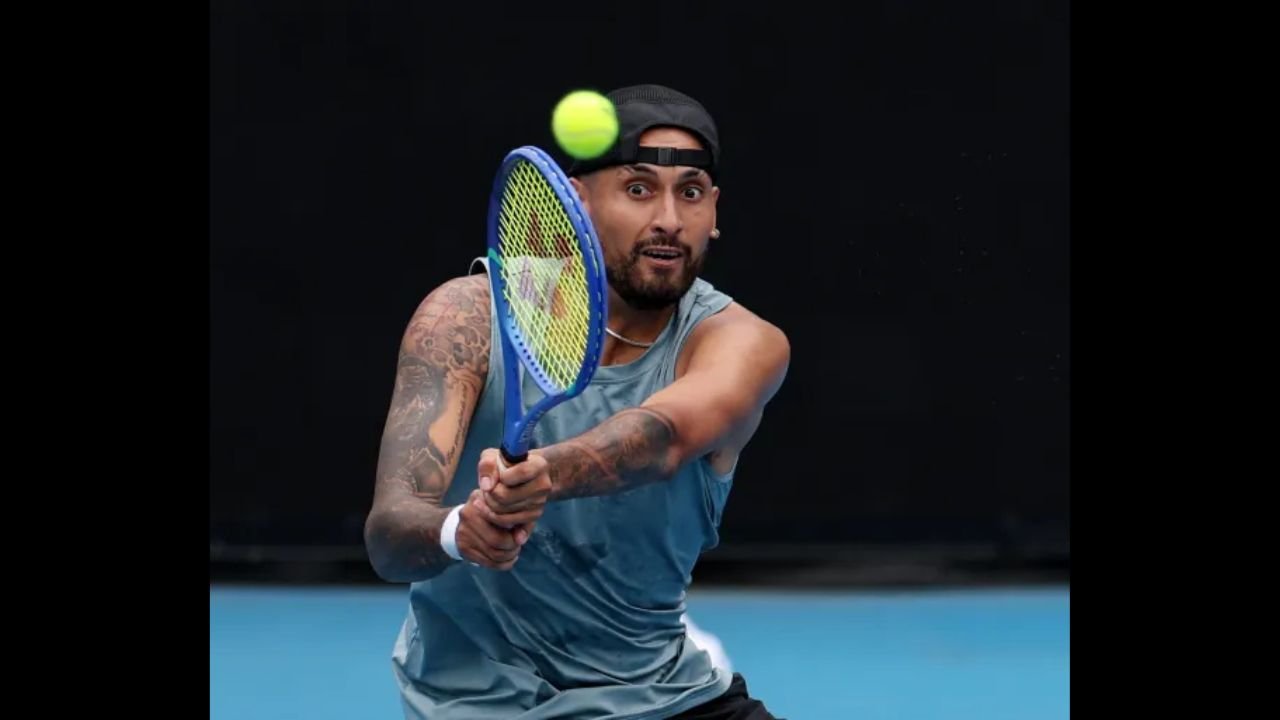
Nick Kyrgios has been provisionally suspended from professional tennis after an anti-doping test detected a cocaine metabolite in a sample collected during the Mallorca Open in June. The International Tennis Integrity Agency confirmed the suspension on August 19, 2026, turning another difficult chapter in the Australian’s career into one of his most serious setbacks yet.
The 31-year-old former Wimbledon finalist has accepted responsibility for the failed test and decided not to challenge the provisional suspension. However, the case is not yet the same as a final ban. The eventual punishment will depend on the circumstances surrounding the positive result and the outcome of the anti-doping process.
The Test
Kyrgios provided his sample on June 22, 2026, while competing at the ATP 250 tournament in Mallorca, Spain.
A WADA-accredited laboratory reported the presence of benzoylecgonine, a metabolite of cocaine, with the result confirmed on July 17. Cocaine is prohibited in competition under the Tennis Anti-Doping Programme and is classified as a stimulant and substance of abuse.
The positive finding triggered a mandatory provisional suspension under the applicable tennis anti-doping rules.
Suspension Began
The provisional suspension took effect on August 4, 2026.
Under the suspension, Kyrgios cannot compete in tennis events and is also prohibited from coaching at or attending events sanctioned by the organizations covered by the Tennis Anti-Doping Programme, including the ATP, WTA, ITF and Grand Slam tournaments.
The ITIA’s rules provide for automatic provisional suspension when a confirmed finding involves a non-specified prohibited substance. Players have a right to challenge such a suspension before an independent tribunal.
Kyrgios has not chosen that route.
His Response
Rather than disputing the finding publicly, Kyrgios addressed the situation himself on social media.
He acknowledged the failed test, described what happened as a serious mistake and accepted responsibility. He also apologized to his fans, family, sponsors and young people who follow him.
His statement also provided context about the difficult period preceding the suspension. Kyrgios pointed to the physical and emotional consequences of repeated injuries and the uncertainty surrounding the future of his playing career.
He said he plans to step away from public life and social media for 28 days to concentrate on himself and his recovery.
How Long?
The biggest unanswered question is the length of Kyrgios’ eventual sanction.
The provisional suspension is not itself the final punishment. The case must proceed through the anti-doping system before a final period of ineligibility is established.
The circumstances of the cocaine use will be particularly important. Under the anti-doping framework, substances of abuse can receive different treatment when an athlete establishes that the use occurred out of competition and was unrelated to sporting performance.
That means reports suggesting a definite one-, three- or four-year ban at this stage should be treated cautiously. No final length of suspension has been established yet.
A Difficult Career
The timing is especially significant because Kyrgios has spent much of the past several seasons trying to get his body back into playing condition.
Persistent wrist and knee problems have severely restricted his schedule. Reuters reported that injuries and surgeries had kept him largely sidelined since 2023, while he managed only a handful of matches during the 2026 season.
For a player once regarded as one of the most naturally gifted entertainers in men’s tennis, the prolonged absence has been frustrating.
Kyrgios reached the Wimbledon final in 2022 and previously climbed as high as No. 13 in the ATP rankings. His career, however, has repeatedly been interrupted by injuries and controversies.
Retirement Questions
Kyrgios’ own comments have added another layer to the situation.
He has acknowledged how difficult it has been to contemplate the possibility that his playing career could be nearing its end. His body has repeatedly prevented him from competing at the level he expects of himself, creating uncertainty about whether a full-time return is realistic.
The latest suspension arrives at precisely that crossroads.
Instead of preparing for another major comeback, Kyrgios is now facing an anti-doping investigation that could further delay or potentially complicate his return to competitive tennis.
Why It Matters
The case is also notable because Kyrgios has previously spoken forcefully about doping controversies involving other players.
That history has made the positive test particularly newsworthy within tennis. Nevertheless, the anti-doping process still has to determine the facts and appropriate sanction rather than relying on public reaction.
A positive test establishes an anti-doping case, but the final consequences depend on the applicable rules and the evidence presented during the proceedings.
What’s Next?
For now, Kyrgios remains provisionally suspended rather than permanently banned.
The ITIA’s case process allows a player to respond to the allegations, with further proceedings determining whether an anti-doping rule violation has been established and what sanction should follow.
Kyrgios’ decision not to appeal the provisional suspension means he will remain unable to participate in sanctioned tennis while the case develops.
His immediate focus appears to be stepping away from the spotlight and addressing the personal difficulties he described.
Nick Kyrgios’ latest setback comes at a pivotal point in a career that has always combined extraordinary tennis ability with unpredictability.
He has reached a Grand Slam final, defeated elite opponents and become one of the sport’s most recognizable personalities. Yet injuries have increasingly limited his opportunities to show what he can still do on court.
Now, the positive cocaine test has created another obstacle.
As of August 20, 2026, Kyrgios has a provisional suspension, not a final ban. The eventual sanction remains to be determined, and the circumstances of the positive test will be central to that decision. Until the anti-doping process concludes, predictions about how long he will be barred from tennis remain premature.