
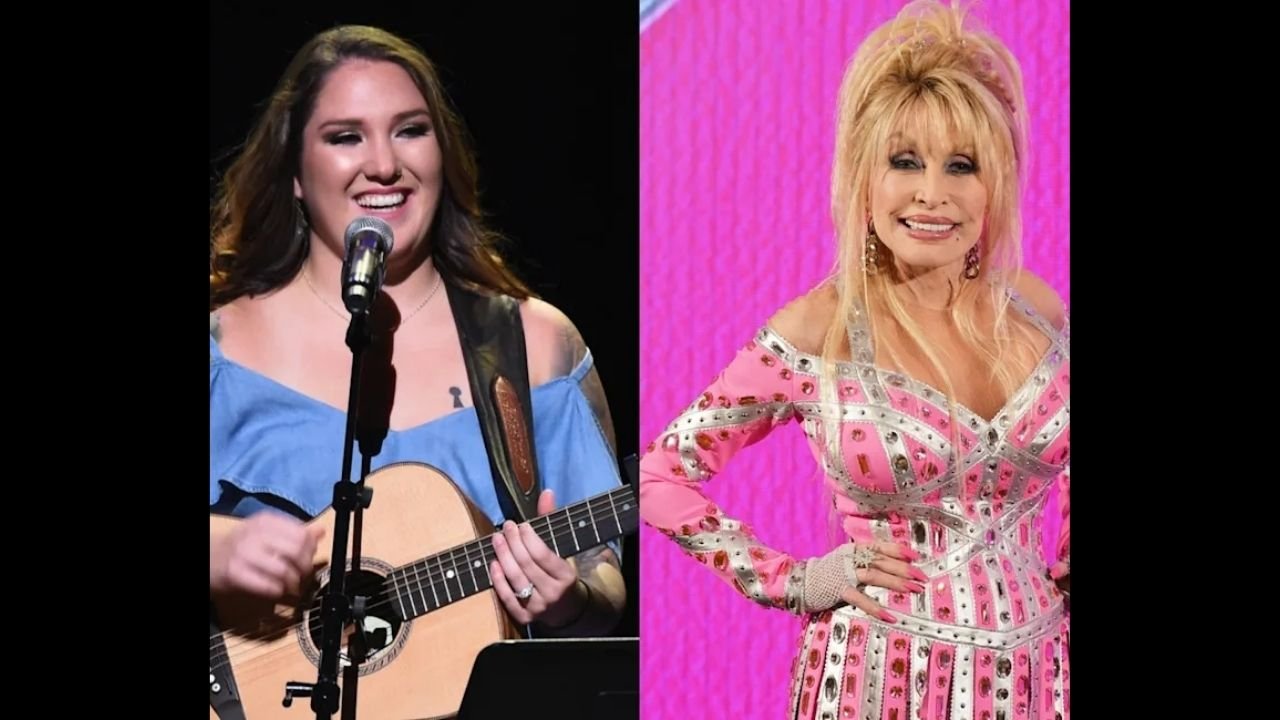
The Garth Brooks daughter tribute debate has become an unexpectedly heated conversation in the country music community after Allie Colleen Brooks shared a personal message following Dolly Parton’s death.
Allie, the youngest daughter of country superstar Garth Brooks, reflected on Parton’s passing while also acknowledging one of her own deepest fears: eventually losing her famous father and watching millions of people publicly mourn him.
The message struck readers in dramatically different ways.
Critics believed bringing Garth into a post prompted by Parton’s death distracted from a moment meant to honor the country legend. Others defended Allie, arguing that she was expressing something few people experience—the complicated reality of grieving a parent who also belongs, in a cultural sense, to millions of fans.
Allie subsequently defended her intentions rather than walking back the message.
What She Said
Allie’s post began with an intensely personal thought about her father.
She described her greatest fear as the day Garth dies and she has to watch the world mourn someone it never knew in the same intimate way she did.
That observation became the sentence driving much of the controversy.
Allie also expressed sympathy for Parton’s family and loved ones. Her broader reflection appeared to be about the collision between private loss and public mourning that accompanies the death of a globally famous entertainer.
For Allie, Dolly’s death seemingly brought that future possibility closer to home.
Garth Brooks has spent decades as one of country music’s biggest stars. To audiences, he is the performer behind an enormous catalog of familiar songs. To Allie, however, the same person is simply her father.
That distinction was central to what she was attempting to communicate.
Why Fans Objected
Some readers nevertheless considered the timing inappropriate.
Their criticism focused less on Allie having fears about losing her father and more on her decision to express them while people were mourning Parton.
Critics argued that a tribute should have remained focused on Dolly’s life, family and achievements instead of shifting toward the hypothetical future death of another country star.
Others took issue with the suggestion that fans did not know an artist in the way family members did.
While that statement is literally understandable—relatives naturally have private relationships with public figures—some fans felt it undervalued the emotional role musicians can occupy in their lives.
For listeners who had followed Parton for decades, the grief was real even though they had never met her personally.
A Different View
Allie also received substantial support.
Her defenders interpreted the message as vulnerability rather than self-importance.
They argued that being the child of a globally recognized performer creates an unusual emotional situation. When an internationally famous parent dies, the family cannot necessarily experience that loss privately before it becomes news, social-media content and public conversation.
Millions of strangers may share photographs, tell stories, debate the celebrity’s legacy and revisit deeply personal moments.
Supporters said Allie was confronting that prospect rather than attempting to diminish anybody else’s sadness.
The death of an icon such as Parton could understandably make the daughter of another country legend imagine what her own family might someday face.
Country Family Support
The discussion also resonated with people who grew up around famous musicians.
Mackenzie Lynn Adkins, daughter of country singer Trace Adkins, was among those who publicly supported Allie’s perspective.
Her reaction added another dimension to the conversation.
Children of entertainers can have an unusual relationship with celebrity. A person known by millions as an artist, actor or cultural figure remains a parent inside the home.
That difference may become especially difficult when illness or death turns a private family experience into a public event.
For those defending Allie, that was the real subject of her post.
Allie Pushes Back
As criticism accumulated, Allie engaged directly with commenters rather than releasing a polished apology.
She emphasized that her Instagram account represents her own experiences and thoughts.
More importantly, she rejected claims that she was instructing people how to mourn Parton.
Allie explained that she was describing why moments like Parton’s death are complicated for her because of her own position within the country music world.
“I’m not telling anyone else how to grieve,” she told one critic.
Her response indicated that she viewed the original post as personal reflection, not criticism of fans grieving Dolly.
Grief Becomes Public
The controversy raises a broader question that extends beyond Garth Brooks, Allie Colleen or Dolly Parton.
Who gets to grieve a celebrity?
The simplest answer may be that family members and fans experience entirely different losses.
A listener can associate an artist with childhood, relationships, difficult periods or major life milestones. Songs sometimes remain part of someone’s life for decades, creating an emotional connection despite there being no personal relationship with the performer.
A daughter experiences something fundamentally different.
She knows the person behind the public identity.
Those forms of grief do not need to be identical to be genuine.
The difficulty begins when private and public mourning happen simultaneously, particularly in the social-media era, where emotional reactions are instantly analyzed by enormous audiences.
Dolly’s Influence
Parton’s death generated such an intense response because her influence extended far beyond country music.
Across her career, she became a songwriter, performer, actress, businesswoman and philanthropist whose work reached several generations.
Her songs became standards, while initiatives including the Imagination Library expanded her cultural legacy beyond entertainment.
That enormous public connection explains why fans reacted emotionally to her death.
It may also explain why Allie’s message became controversial so quickly. Parton was not simply another performer to many people reading the post.
Debate Continues
The Garth Brooks daughter tribute debate ultimately reflects two interpretations of the same message.
Critics saw a poorly timed post that redirected attention from Dolly Parton toward Allie and her famous father.
Supporters saw a daughter confronting an uncomfortable future—the knowledge that when she eventually loses her dad, one of the most private moments of her life will immediately become a public event.
Allie has made clear which interpretation reflects her intentions.
She says she was not attempting to control anyone’s grief. She was describing her own reaction to death within an industry that has shaped virtually her entire life.
That explanation may not satisfy every critic, but it places the controversy in a more complicated context than the initial backlash suggests.
At its core, the debate is not simply about one celebrity tribute. It is about where public admiration ends, where private family grief begins, and what happens when the two inevitably collide.