
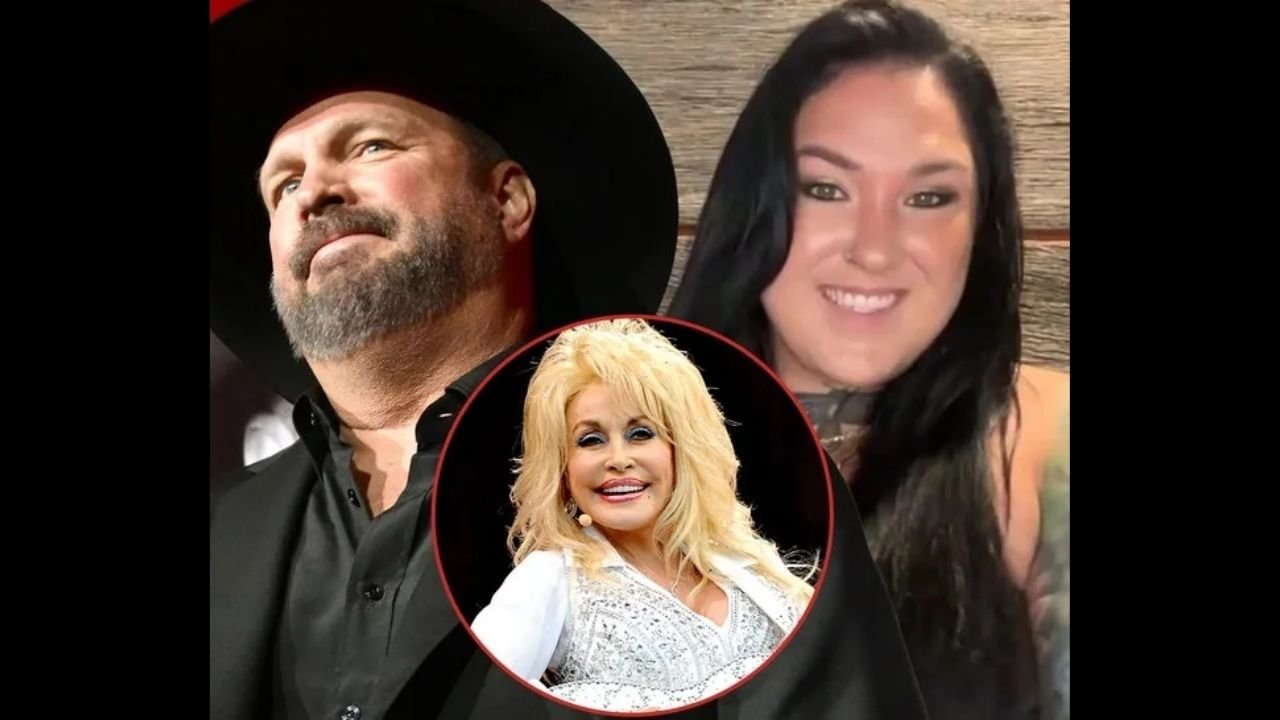
Garth Brooks’ daughter Allie Colleen Brooks has found herself at the center of an unexpected social media controversy after sharing a deeply personal reaction to the death of country music legend Dolly Parton.
Allie, a country singer in her own right, posted an emotional Instagram message following Parton’s death on August 25, 2026. Instead of writing only about the late superstar, the 30-year-old reflected on a fear she carries as the daughter of one of country music’s most recognizable performers.
Her words quickly divided readers.
Some understood the post as an unusually personal perspective on grief and fame. Others questioned why Allie brought her father into a tribute published immediately after Parton’s death.
As criticism spread, Allie did not remain silent. She responded directly to commenters and explained what she had intended to say.
What Allie Wrote
At the heart of the controversy was Allie’s description of the fear she feels when thinking about eventually losing her father.
“My greatest fear in life is the day my Dad loses his life,” she wrote, before describing the difficulty she anticipates in watching the wider world mourn someone she knows in a profoundly different way.
She then offered her condolences to Parton’s relatives and close friends.
Allie acknowledged the extraordinary life Parton had lived and thanked the singer’s loved ones for sharing her with the public.
Her broader message focused on the complicated relationship between love and grief. To Allie, Parton’s death appeared to bring up questions about what happens when private family loss becomes a massive public event.
That perspective soon became the focus of the conversation.
Backlash Begins
Not everyone interpreted Allie’s words as she intended.
Critics argued that mentioning Garth Brooks shifted attention away from Parton at a moment when millions of people were remembering the “Jolene” and “9 to 5” singer.
Others questioned whether the post appeared to draw a distinction between the grief experienced by a celebrity’s family and the sadness felt by longtime fans.
The timing made the reaction particularly intense.
Parton’s death had generated an enormous international response. Musicians, actors, public figures and generations of listeners were sharing memories and describing how her music and generosity had affected their lives.
Against that backdrop, Allie’s decision to discuss her fear of one day losing Garth struck some readers as an unusual choice.
Fans Defend Her
The response was not universally negative.
Other followers argued that Allie’s message was being interpreted too harshly.
From their perspective, she was not claiming that fans have no right to mourn famous people. Instead, they saw a daughter confronting an uncomfortable reality unique to families whose parents are internationally known.
Garth Brooks is not simply a country superstar to Allie. He is her father.
That difference appeared to be the point she was attempting to communicate: when a famous person dies, the public loses an artist or cultural figure, while relatives simultaneously lose someone who occupied an entirely private place in their lives.
Supporters said Parton’s death had understandably caused Allie to imagine eventually experiencing that situation herself.
Allie Responds
As the debate intensified, Allie began answering people directly.
When one commenter interpreted her post as suggesting only family members should be entitled to grieve, Allie rejected that reading.
She explained that she was talking about her own difficulty responding to death within the music industry because of her personal experiences.
“I’m not telling anyone else how to grieve,” she wrote.
Her response made an important distinction between describing her own perspective and attempting to establish rules for everybody else.
Allie later returned to the controversy through Instagram Stories on August 28, admitting that she did not understand why people were so angry with her.
Rather than withdrawing the original sentiment, she continued defending the personal context behind it.
Famous Father
Allie’s relationship with Garth helps explain why Parton’s death prompted such a personal response.
Born in 1996, Allie is the youngest of Garth’s three daughters with his former wife Sandy Mahl. Her sisters are Taylor and August.
She later pursued music herself, releasing songs and building a career independent of her father’s enormous commercial legacy.
Garth has nevertheless remained an important presence in her life and career.
The father and daughter have performed together, and Allie has publicly celebrated their relationship on social media.
That bond gives another dimension to her controversial Parton post. What some readers saw as an unnecessary reference to Garth appears to have originated from Allie confronting the prospect of eventually experiencing an intensely public version of an intensely private loss.
Dolly’s Global Impact
Parton’s death at 80 prompted tributes from across entertainment and beyond.
Her influence stretched far beyond her recordings. Alongside decades of hits, Parton built a reputation for philanthropy, particularly through her Imagination Library literacy program.
Her family announced her death on August 25, triggering an immediate wave of remembrances.
Reba McEntire, Miley Cyrus, Wynonna Judd, Carly Pearce and numerous other entertainers were among those who publicly reflected on her life and influence.
That enormous response demonstrated exactly how deeply people who never personally knew Parton could still feel connected to her.
It also provides the complicated context behind Allie’s comments.
Public Versus Private Grief
The reaction to Garth Brooks’ daughter ultimately became about something larger than one Instagram post.
Celebrity deaths can create two very different forms of grief at the same time.
Fans mourn the voice, songs, performances and memories connected to an artist. Families grieve the person who existed away from stages, cameras and public attention.
Neither experience is identical.
Allie’s attempt to describe that difference clearly resonated with some people and frustrated others. Her choice to connect Parton’s death with her fears about Garth ensured the message would receive attention at an already emotional moment.
The resulting public reaction remains sharply divided.
What is clear is that Allie has stood behind the central meaning of her message. She maintains that she was describing her own complicated relationship with public mourning—not telling Dolly Parton’s millions of admirers how they should experience their loss.