
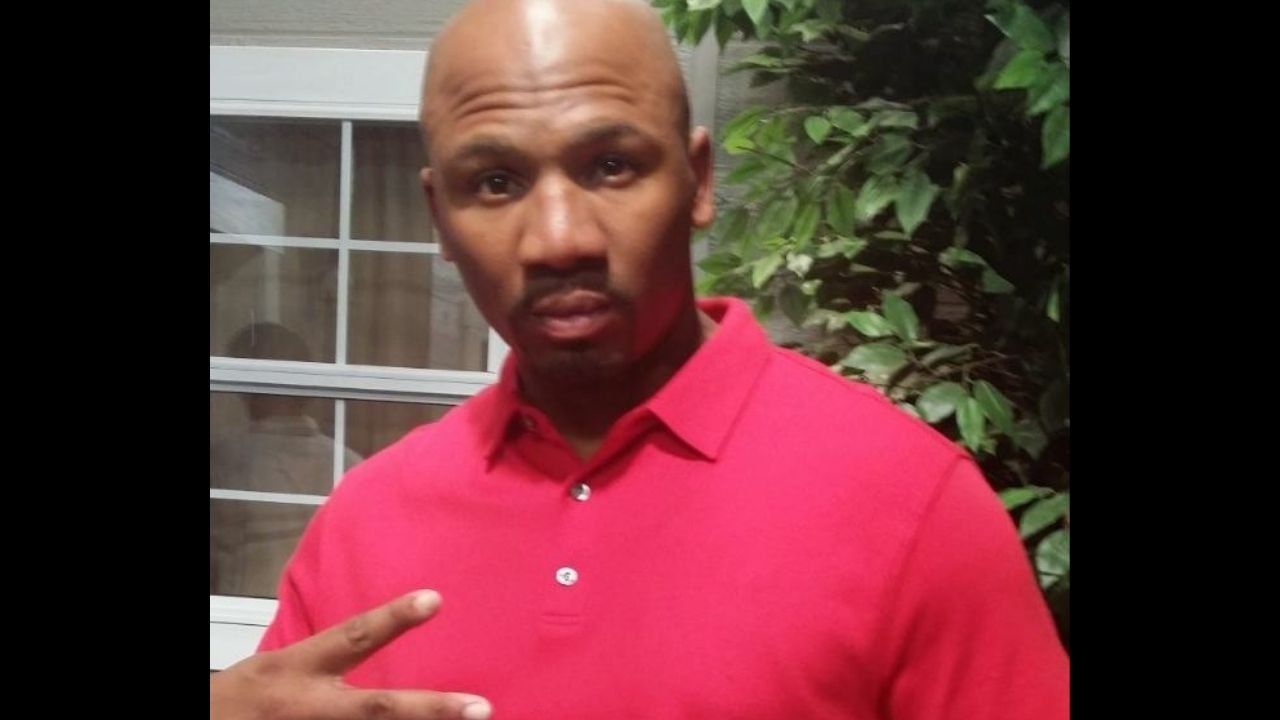
Samuel Monroe Jr., the actor whose memorable performances made him a familiar face in some of the most enduring Black films of the 1990s, died on August 26, 2026, at age 52.
Monroe was African American and was born in Los Angeles, California. His career became closely connected with a transformative period in Black American cinema, particularly through appearances in Menace II Society, Tales from the Hood, Set It Off, Don’t Be a Menace to South Central While Drinking Your Juice in the Hood and The Players Club.
His death followed a prolonged and severe battle with meningitis that resulted in devastating medical complications. He is survived by his mother, wife and three children.
His Ethnicity
Samuel Monroe Jr. was African American and an American by nationality.
He was born on November 28, 1973, in Los Angeles, a city that would also provide the cultural backdrop for some of the films most closely associated with his career.
Publicly available biographies do not provide reliable details establishing a more specific ancestral or ethnic heritage beyond his African American identity. Claims assigning him to a particular African, Caribbean or other ancestral group should therefore be treated cautiously unless supported by his family.
What is much clearer is Monroe’s place within Black entertainment and the collection of films that introduced his work to audiences during the 1990s.
Los Angeles Roots
Monroe emerged as an actor at a remarkable time for Black filmmaking.
During the early 1990s, a new generation of directors, writers and performers was bringing stories about Black American communities to mainstream theaters with greater visibility.
Los Angeles was particularly important to that movement.
Films explored family, friendship, racism, policing, poverty, violence and everyday life in neighborhoods rarely portrayed with comparable detail by major Hollywood productions.
Monroe found himself appearing in several projects from that era that would develop substantial cultural followings.
Menace II Society
His best-known early movie was the Hughes brothers’ 1993 crime drama Menace II Society.
Monroe played Ilena’s cousin in the film, appearing in one of its tense sequences. Although he was not the central character, the performance was memorable enough to become strongly associated with his screen persona.
The film, starring Tyrin Turner as Caine Lawson, became one of the defining urban dramas of its decade.
For Monroe, it provided a significant introduction to movie audiences and helped establish the intense screen presence that casting directors would use in later projects.
More 1990s Roles
Monroe continued appearing in films that became familiar titles for audiences interested in Black cinema.
In 1995, he played Bulldog in the horror anthology Tales from the Hood. The following year brought appearances in Set It Off and the Wayans brothers comedy Don’t Be a Menace to South Central While Drinking Your Juice in the Hood.
The latter gave Monroe an opportunity to play with the tough-character image audiences already recognized.
Instead of simply repeating the type of performance seen in serious urban dramas, he participated in a comedy specifically designed to parody many of the genre’s familiar characters and conventions.
In 1998, Monroe appeared in Ice Cube’s directorial debut, The Players Club.
Together, those credits placed him across crime dramas, horror, comedy and other films that remain closely identified with 1990s Black popular culture.
Television Work
Monroe’s career was not confined to movie theaters.
He also appeared on television, with credits including Out All Night, NYPD Blue, The Steve Harvey Show, Southland and Black Jesus.
His early television work included an appearance opposite Patti LaBelle on Out All Night before Menace II Society helped raise his movie profile.
He continued acting long after the decade that produced his best-known performances. Later credits included projects such as She Ball, Packz and Payment Received.
That longer career is sometimes overlooked because his 1990s performances remain so recognizable.
Music as Caffeine
Acting was only one side of Monroe’s creative career.
He also made music under the names Caffeine and Caffamilliano.
As Caffeine, he released Things in the Game Done Changed. The record included contributions from artists including Kurupt, N.O.R.E. and Too $hort, showing Monroe’s connection to hip-hop alongside his Hollywood work.
The album appeared around the turn of the millennium; AllMusic lists its original release as October 12, 1999, with additional CD and cassette releases appearing in 2000.
His work in music reinforced the cultural overlap between hip-hop and Black filmmaking that was especially visible throughout the 1990s.
Health Battle
Monroe’s final months were dominated by a serious medical crisis.
His wife, Shawna Stewart, said he had contracted meningitis while working on a project in Las Vegas and that the illness had initially gone undiagnosed.
By April 2026, Monroe was hospitalized and on life support. His condition produced severe complications affecting his brain and spine.
Stewart later said he lost his ability to move and experienced numerous seizures. Brain swelling and other complications ultimately required multiple surgeries.
Reports also described MRSA pneumonia, kidney problems and infections among the complications he faced during the prolonged illness.
Death at 52
Monroe died on Wednesday, August 26, 2026, at Providence Saint Joseph Medical Center in Burbank, California.
He was 52.
His wife confirmed his death publicly, while his mother, Joyce Patton, also shared the news and thanked people who had supported and prayed for her son during his illness.
Monroe is survived by his mother, Shawna Stewart and his three children, Kingston, Milliano and Brooklynn.
Samuel Monroe Jr.’s ethnicity was African American, but his cultural legacy is better understood through the body of work he left behind.
He was part of a generation of Black performers whose films expanded the range of stories reaching mainstream American audiences during the 1990s.
Monroe was rarely the conventional leading man. Instead, he developed a reputation through supporting characters whose intensity could make relatively limited screen time memorable.
From Menace II Society and Tales from the Hood to Set It Off and The Players Club, those performances connected him permanently with a distinctive period in Black Hollywood history.
His death at 52 closes a career spanning more than three decades, but the films that made Samuel Monroe Jr. recognizable continue to introduce his work to new audiences.