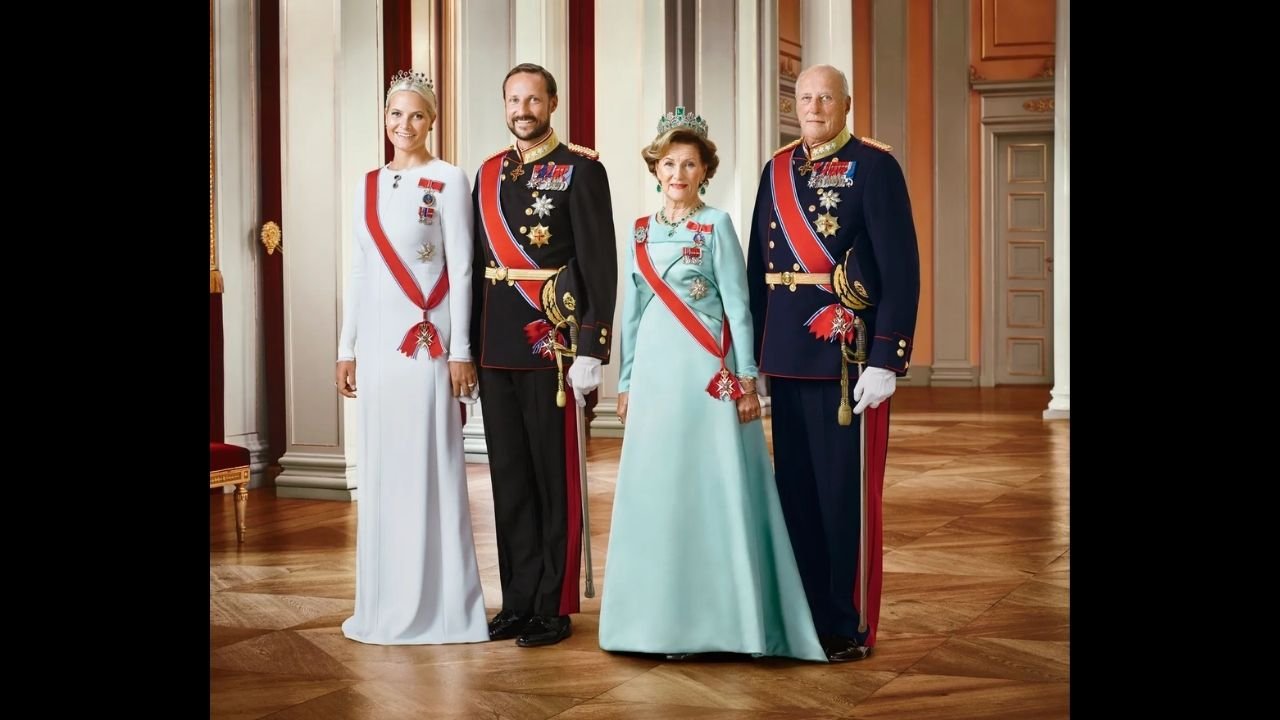
Norway is widely known for religious freedom and an increasingly diverse population, but its monarch remains subject to an unusual constitutional rule concerning religion.
King Haakon VIII, who succeeded his father King Harald V on August 28, 2026, is an Evangelical Lutheran and belongs to the Church of Norway. His religious affiliation is not simply a royal family tradition. Norway’s Constitution specifically requires the reigning monarch to profess the Evangelical-Lutheran faith.
The rule has survived major changes to the relationship between Norway’s monarchy, government and national church. While the King no longer serves as the formal head of the church, the religious requirement applying to the sovereign remains.
Here is why religion still has a constitutional place in the Norwegian monarchy.
What Is His Religion?
King Haakon VIII is a Christian belonging to the Evangelical-Lutheran tradition represented nationally by the Church of Norway.
That continues the religious tradition followed by his father, the late King Harald V, and generations of Norwegian monarchs.
The Church of Norway traces its Lutheran identity to the Reformation and was historically closely connected with the Norwegian state.
Modern Norway, however, guarantees freedom of religion. Citizens are not required to follow Lutheran Christianity, and Norwegian society includes Christians from numerous denominations, Muslims, members of other religions and people with no religious affiliation.
The monarch is treated differently because of a specific provision in the Constitution.
Article 4
Article 4 of Norway’s Constitution states that the King must at all times profess the Evangelical-Lutheran religion.
That makes the monarch’s faith a constitutional qualification rather than solely a personal decision.
Norway’s Constitution dates to May 17, 1814, although it has undergone extensive amendments over the following two centuries. Religion originally occupied a much stronger position within the constitutional structure than it does today.
Many of those historical connections have gradually been removed or rewritten as Norway developed a clearer separation between religious institutions and government.
Article 4 nevertheless survived those reforms.
As a result, a Norwegian citizen is free to choose a religion or have no religion, while the person serving as monarch does not have the same unrestricted choice if they wish to remain constitutionally qualified as King or Queen.
Church of Norway
The Church of Norway is an Evangelical-Lutheran Christian denomination and was historically Norway’s established state church.
For generations, the monarchy and church were closely connected. The Constitution gave the King significant responsibilities relating to the church, while the government played an important role in its administration.
That arrangement gradually became increasingly difficult to reconcile with a modern society committed to equal treatment of different religions.
A major constitutional reform was therefore adopted in 2012.
The changes altered the relationship between the state and the Church of Norway and ended the monarch’s traditional position as the church’s formal head.
Further reforms followed, and from 2017 the Church of Norway became a separate legal entity rather than functioning as a branch of the state administration.
Is the King Church Head?
No. Describing Norway’s current monarch as the “head of the Church of Norway” would be outdated.
The 2012 constitutional changes substantially reorganized church-state relations. Although the Constitution continues to recognize the Church of Norway as the country’s established Evangelical-Lutheran church and says it shall receive state support, the King no longer governs it as its formal head.
The church manages its own internal affairs through its ecclesiastical institutions.
The distinction is important when discussing King Haakon’s religion. He is constitutionally required to be Evangelical Lutheran, but that does not mean he personally controls the Church of Norway.
His religious affiliation and institutional authority are two separate questions.
Harald’s Role
King Harald V also belonged to the Church of Norway throughout his reign.
During the discussions surrounding Norway’s church reforms, the future of Article 4 became a significant issue. Reports from the period indicated that Harald wanted the constitutional provision requiring the monarch to remain Evangelical Lutheran to be retained.
The broader reforms still dramatically reduced the formal connection between the Crown and church.
Harald’s reign also demonstrated that personally following Norway’s traditional royal faith did not prevent a monarch from publicly embracing citizens with completely different beliefs.
That became particularly clear in one of his best-known speeches.
Famous 2016 Speech
In September 2016, King Harald delivered a speech at a garden party at the Royal Palace that attracted international attention for its definition of Norwegian identity.
Instead of describing Norway through a single ethnicity, lifestyle or religion, Harald presented a deliberately broad picture of the country.
He referred to Norwegians who believe in God and Allah as well as those who believe in “everything and nothing.”
The message was significant coming from a monarch who was himself constitutionally obligated to follow one particular branch of Christianity.
Harald’s remarks reflected an important distinction at the heart of the modern Norwegian monarchy: the sovereign has a prescribed religion, but the people do not.
Religious Freedom
Norway today protects freedom of religion and belief.
The Constitution recognizes the country’s Christian and humanist heritage while also establishing principles protecting religious freedom.
Consequently, the Evangelical-Lutheran requirement applying to the King should not be interpreted as a general requirement for Norwegian citizens.
Norway has become considerably more religiously diverse during the modern era, and the Royal House regularly participates in events involving different communities and faith traditions.
The monarch’s constitutional religion therefore exists alongside a wider commitment to pluralism.
What About Ingrid?
The religious provision also has implications for the future of the monarchy.
King Haakon’s eldest child, Crown Princess Ingrid Alexandra, became first in line to the throne following her father’s accession.
If she eventually becomes Norway’s reigning Queen, Article 4 would apply to her as sovereign.
The constitutional wording traditionally uses “King,” but constitutional provisions governing the monarchy apply within Norway’s modern succession framework, under which women and men can inherit the Crown.
Ingrid Alexandra represents the generation that could eventually determine how Norway balances this centuries-old religious requirement with an increasingly secular and diverse society.
A Modern Monarchy
The answer to the question “What is the Norway King’s religion?” is straightforward: King Haakon VIII follows Evangelical-Lutheran Christianity and is associated with the Church of Norway.
What makes the answer unusual is that his faith is constitutionally prescribed.
Norway has dismantled much of the old institutional relationship between the Crown, government and church, particularly through the reforms beginning in 2012. Yet Article 4 remains.
The result is a distinctive compromise between history and modern Norway. The King must remain Evangelical Lutheran, but he is no longer head of the national church, while the people he represents remain free to believe in any religion—or none at all.