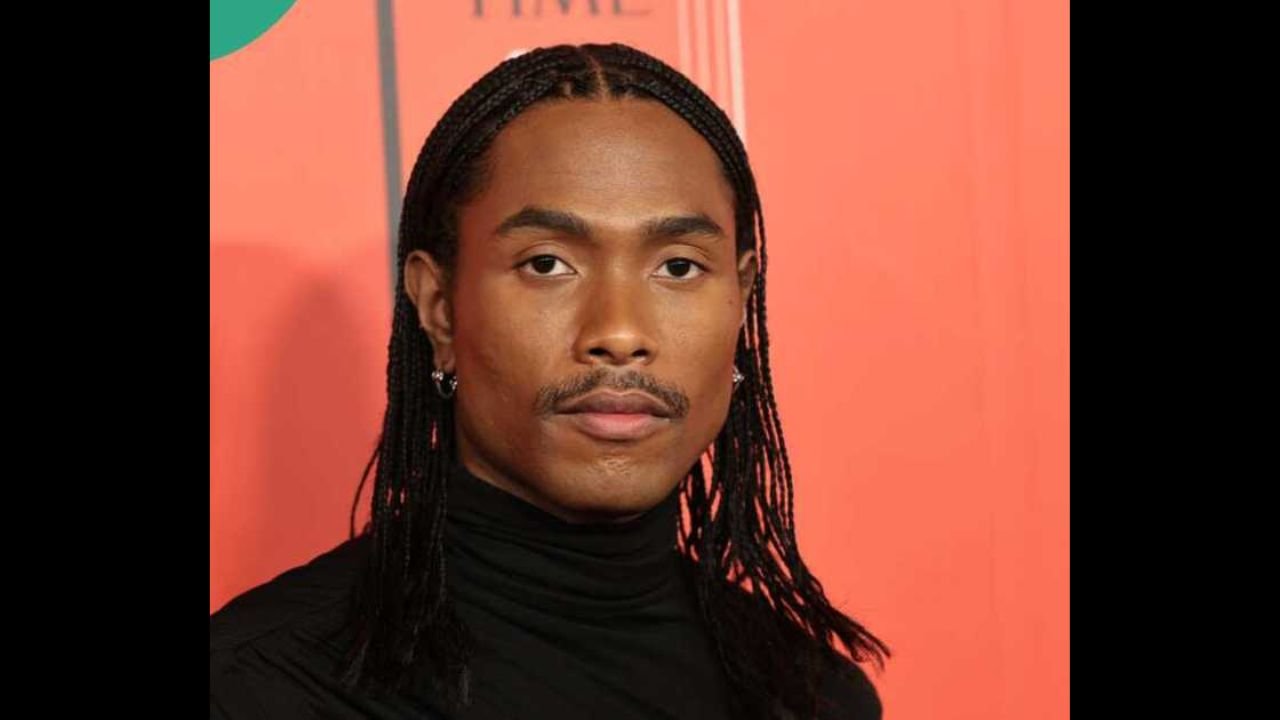
Steve Lacy is biracial, with African-American and Filipino heritage. The Grammy-winning singer, songwriter, guitarist and producer was raised in Compton, California, primarily by his mother, Valerie Lacy, while his father was Filipino.
Lacy’s background has attracted renewed attention following his emotional visit to the Philippines in August 2026. During that trip, he connected with members of his father’s family for the first time, giving fans a rare glimpse into a personal part of his life that had remained largely private.
His Ethnicity
Steve Lacy is of African-American and Filipino descent.
His mother, Valerie Lacy, is Black, while his father was Filipino. Lacy’s full legal name is Steve Thomas Lacy-Moya, reflecting his paternal family connection.
Although both sides of his heritage form an important part of his identity, his upbringing was largely shaped by his mother’s side of the family.
His Mother
Lacy was raised primarily by his mother in Compton, California.
Growing up in the Los Angeles County community had a significant influence on his development as an artist. Compton has a rich musical history, particularly through hip-hop and R&B, and Lacy eventually developed a style that blends elements of alternative R&B, funk, soul, rock and electronic music.
His mother’s influence was especially important because Lacy lost his father when he was still a child.
His Filipino Father
Lacy’s father was Filipino and carried the surname Moya.
His father’s death from lung cancer when Lacy was around 10 years old meant that he had limited opportunity to develop a relationship with him or become deeply familiar with his father’s cultural background.
As a result, Lacy grew up primarily surrounded by his Black American family and community.
That does not erase his Filipino heritage. Instead, it explains why his relationship with that side of his identity has developed gradually over time.
Losing His Father
The death of Lacy’s father was an important event in his childhood.
Losing a parent at such a young age can fundamentally change a person’s connection to family history. In Lacy’s case, it also meant that his direct link to his Filipino heritage became less accessible.
For years, much of what fans knew about Lacy centered on his upbringing in Southern California and his rise through the music industry.
His Filipino background was part of his story, but it was not something he had extensively explored in public.
Manila in 2026
That changed during Lacy’s August 2026 trip to the Philippines.
He traveled to Manila to headline LaLaLa Fest, but the concert became only one part of a much more personal experience.
During the visit, Lacy met relatives from his father’s side of the family for the first time.
The reunion reportedly included paternal relatives whom he referred to using Filipino family terms such as ate and kuya.
For Lacy, meeting these relatives provided a direct connection to a side of his family that had been distant throughout much of his childhood.
A Powerful Coincidence
The Manila trip carried an especially emotional detail.
Lacy told the audience that his first performance in the Philippines occurred on the 18th anniversary of his father’s death.
The coincidence gave the concert an additional layer of meaning.
He was performing in the country associated with his father’s heritage while marking a significant anniversary connected to the person through whom that heritage came into his life.
The trip therefore became more than another international stop on a music tour.
Meeting His Relatives
Lacy later shared glimpses of his time with his newly discovered family.
Among the most memorable moments was a gathering at a Filipino karaoke bar.
The casual celebration offered a contrast to the scale of his professional life. Instead of being surrounded by musicians, producers or thousands of concertgoers, Lacy was spending time with relatives he had only recently met.
The reunion also demonstrated how cultural identity can evolve throughout adulthood.
Someone can grow up with limited exposure to one side of their heritage and still discover a meaningful connection to it later in life.
His Compton Upbringing
Lacy’s identity cannot be separated from his Compton upbringing.
His musical career emerged from Southern California, where he developed his skills as a guitarist and producer before becoming a solo star.
He first gained major attention as part of The Internet, the alternative R&B group associated with Syd and other influential musicians.
His work with the band helped establish his reputation as an inventive guitarist and producer.
Solo Success
Lacy eventually became a major solo artist.
His 2022 album Gemini Rights brought him international attention, particularly through the hit single “Bad Habit.”
The song became his biggest commercial breakthrough and eventually reached No. 1 on the Billboard Hot 100.
His music frequently moves between genres, drawing from R&B, soul, funk, rock and pop while maintaining a distinctive production style.
More Than a Label
Lacy’s ethnicity is straightforward in one sense: he is African-American and Filipino.
His personal experience, however, is more layered.
He was raised primarily by his Black mother in Compton and lost his Filipino father when he was young. Consequently, his connection to Filipino culture was not necessarily the same as someone raised in a household with regular contact with Filipino relatives.
His 2026 trip demonstrated that heritage can be rediscovered later in life.
Steve Lacy is biracial, with African-American and Filipino ancestry. His mother, Valerie Lacy, is African-American, while his late father was Filipino.
Raised mainly by his mother in Compton, Lacy grew up more immersed in his Black American environment and had limited opportunity to explore his Filipino roots after his father’s death.
That changed in a significant way in August 2026, when he visited the Philippines for LaLaLa Fest and met relatives from his father’s side for the first time.
The experience gave Lacy a personal connection to a part of his identity that had remained distant for much of his childhood. His Manila performance, family reunion and karaoke celebration together marked an important moment in his journey of understanding his heritage.