
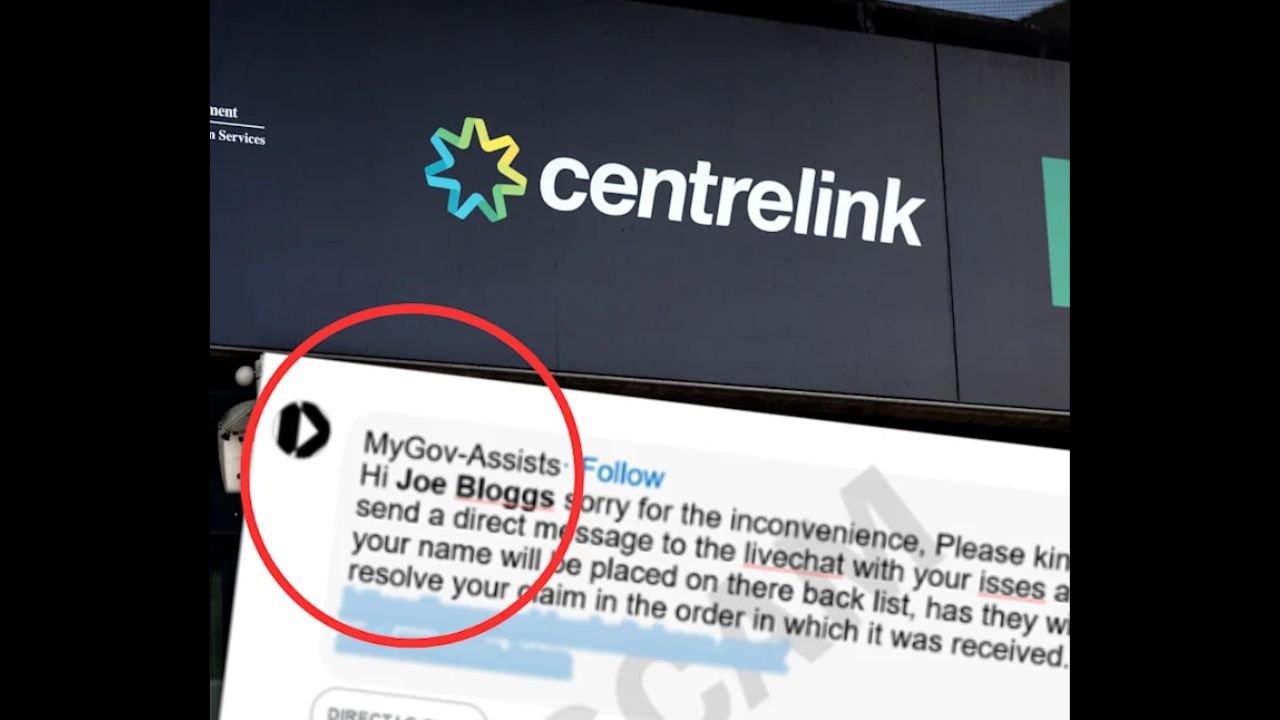
Centrelink customers are being urged to stay alert to emails and text messages that appear to come from Services Australia but are actually designed to steal personal information.
The scams can look remarkably convincing. They may use government branding, formal language and familiar references to Centrelink payments. Their real purpose, however, is usually to push recipients towards a fake website where criminals can collect passwords, identity information or financial details.
For people who depend on Centrelink payments, a message claiming that their money could be stopped can be particularly frightening. That pressure is exactly what scammers exploit.
The Basic Trick
A typical phishing message tells the recipient that something is wrong with their Centrelink or myGov account.
The email might claim that personal details are outdated, an account requires verification or a payment will be suspended unless immediate action is taken.
A link is then provided to supposedly fix the problem.
Instead of opening a genuine government website, the link can take the recipient to a fraudulent page designed to imitate myGov. Anyone who enters their login information may unknowingly send those credentials to the scammer.
Some campaigns go further by asking victims to complete forms, provide identity documents or electronically sign paperwork.
The Biggest Red Flag
Services Australia advises customers not to use links in emails or SMS messages to sign in to their myGov account.
That makes an unexpected message containing a login link an important warning sign.
The safest approach is to ignore the link and independently open the official myGov website or app. Customers can then check whether there is a genuine notification or outstanding action associated with their account.
The same principle applies to messages claiming that payments are about to stop. Rather than responding through the message, verify the information through an official Services Australia channel.
Why It Looks Genuine
Scammers understand that obvious spelling mistakes are easy to detect, so modern phishing campaigns can be much more polished.
A fraudulent message may contain government logos, familiar colours and language that resembles an authentic Services Australia notification.
The timing can also make the deception more effective. A scam may arrive when recipients are expecting information about payments, reporting obligations or changes to government services.
The emotional element is often the strongest weapon.
A warning that a pension, JobSeeker payment or family benefit could be interrupted encourages people to act before they have time to investigate.
Watch The Link
One of the simplest ways to avoid a phishing attack is to avoid clicking the supplied link altogether.
A website address can appear genuine while leading somewhere completely different. Scammers may use addresses containing words such as “myGov”, “Centrelink” or “Services Australia” in an attempt to make the destination look official.
Customers should therefore avoid relying on the appearance of a link alone.
If an email says an account needs attention, open the official service separately and check the account there.
What Criminals Want
The information requested by scammers can vary from campaign to campaign.
They may attempt to obtain:
- myGov usernames and passwords
- Medicare information
- bank account details
- dates of birth
- driver’s licence or passport information
- other identity documents
- answers to security questions
A stolen password can be particularly valuable because criminals may try to use it against other accounts if the same password has been reused elsewhere.
Identity information can also be combined with data obtained from other breaches or scams to create a more complete profile of a victim.
If You Clicked
Mistakes happen, and clicking a suspicious link does not automatically mean an account has been compromised.
The risk becomes much greater if login credentials or personal information were entered.
If that has happened, act promptly. Change the affected password by going directly to the legitimate service rather than returning to the suspicious message.
If the same password is used elsewhere, change it on those accounts too.
Customers should also monitor their bank accounts and Centrelink records for anything unusual. Unexpected changes to personal details, payment arrangements or account activity should be investigated immediately.
Where identity information may have been exposed, checking credit activity can also help identify suspicious applications made in a person’s name.
Report The Scam
Suspicious messages should not simply be deleted without consideration.
Services Australia provides a dedicated reporting channel for suspected scams, allowing customers to forward suspicious communications for investigation. Scam reports can also be made through Scamwatch, operated by the Australian Competition and Consumer Commission.
Reporting matters because authorities can use information from individual incidents to identify patterns, fraudulent websites and emerging campaigns.
Customers should preserve the original message where possible, including its sender information and any suspicious links, rather than altering it before reporting.
Stay One Step Ahead
There is no need to panic whenever a Centrelink-related email arrives. The important distinction is between receiving a message and trusting what it tells you to do.
A genuine-looking logo is not proof that a message is genuine. Neither is an urgent warning about a payment.
The safer habit is simple: do not use unexpected links to access myGov or provide sensitive information. Open the official app or website yourself and check the account directly.
For Centrelink customers, that extra pause can prevent a convincing email from becoming a costly identity theft incident.